
Low Maintenance Landscaping Trends for 2026: 7 Ways to a Lazy, Lush Yard
Low Maintenance Landscaping Trends for 2026: 7 Ways to a Lazy, Lush Yard
The “perfect lawn” is dead. Long live the Lush, Lazy Yard.
In 2026, landscaping trends have shifted. It’s no longer about manicuring nature into submission; it’s about engineering a space that thrives on neglect. We’re talking about yards that sip water instead of guzzling it, plants that feed local birds instead of demanding fertilizer, and technology that does the dirty work for you.
If you want a magazine-worthy garden but only have “mow-and-blow” energy, this guide is for you. We’ll show you how to trade weekend chores for relaxation, and as a bonus, this approach often falls perfectly into a strategy of landscaping on a budget. Here are the 7 most impactful low-maintenance landscaping strategies for 2026.
1. Master “Hydrozoning”: The Efficiency Cheat Code
Stop watering everything the same amount. Hydrozoning is the practice of grouping plants with similar water needs together. It sounds technical, but it’s the single biggest time-saver for modern gardens.
- Zone 1 (The Oasis): High-water plants (hydrangeas, ferns) go right next to the house or hose spigot.
- Zone 2 (The Transition): Moderate-water shrubs and perennials used as a buffer.
- Zone 3 (The Wild): Drought-tolerant natives at the perimeter that survive on rainfall alone.
Why it works: You stop over-watering tough plants and under-watering delicate ones. Your “chore zone” shrinks to just a few feet near your door.
2. The Regional “Super-Natives” Cheat Sheet
Native plants are the ultimate low-maintenance hack. They evolved in your soil. They fight your local pests. They survive your weather extremes.
But which ones look good? Here are the top aesthetic performers for 2026 by region:
| Region | The “Star” Shrub | The “Workhorse” Groundcover | The “Lazy” Perennial |
|---|---|---|---|
| Northeast | Inkberry Holly (Evergreen, round, boxwood alternative) |
Wild Ginger (Lush, shade-loving, weed-suppressing) |
Black-Eyed Susan (Blooms for months, self-seeding) |
| South | Dwarf Yaupon Holly (Tough as nails, no pruning needed) |
Frogfruit (Tiny flowers, walkable, butterfly magnet) |
Purple Coneflower (Drought tolerant, heat lover) |
| Midwest | Ninebark (Dramatic purple foliage, cold hardy) |
Prairie Dropseed (Elegant ornamental grass, smells like popcorn) |
Bee Balm (Explosive color, fights mildew) |
| Southwest | Texas Ranger (Silver leaves, purple blooms, zero water) |
Silver Ponyfoot (Cascading silver carpet) |
Agave Parryi (Structural art, literally zero care) |
| West Coast | Manzanita (Sculptural red bark, evergreen) |
Ceanothus (creeping) (Blue flowers, stabilizing slopes) |
California Poppy (Instant color, reseeds itself) |
3. Shrink the Lawn (The “Meadow” Trend)
The traditional lawn explores a physiological need to control nature. The 2026 “No-Mow” trend embraces softer textures.
- Clover Lawns: Stays green in drought, fixes nitrogen (fertilizes itself), and rarely needs mowing.
- Meadow Gardens: Replace large turf areas with mixed native grasses and wildflowers. You mow it once a year in late winter. That’s it. (This uses a similar “wild but planned” logic to our small backyard ideas).
- Visualize It: Upload your yard to YardRevision and prompt: “Replace lawn with a wildflower meadow and winding gravel path.”
4. Hardscaping 2.0: Permeable & Composite
Concrete cracks and wood rots. The new wave of low-maintenance materials solves both.
- Permeable Pavers: Gaps filled with gravel allow water to drain through, preventing puddles and ice patches.
- Composite Decking (2nd Gen): The new formulations from brands like Trex or TimberTech look indistinguishable from Teak or Ipe but require zero staining or sealing. Be sure to choose “cool touch” technology if you’re in a hot climate.
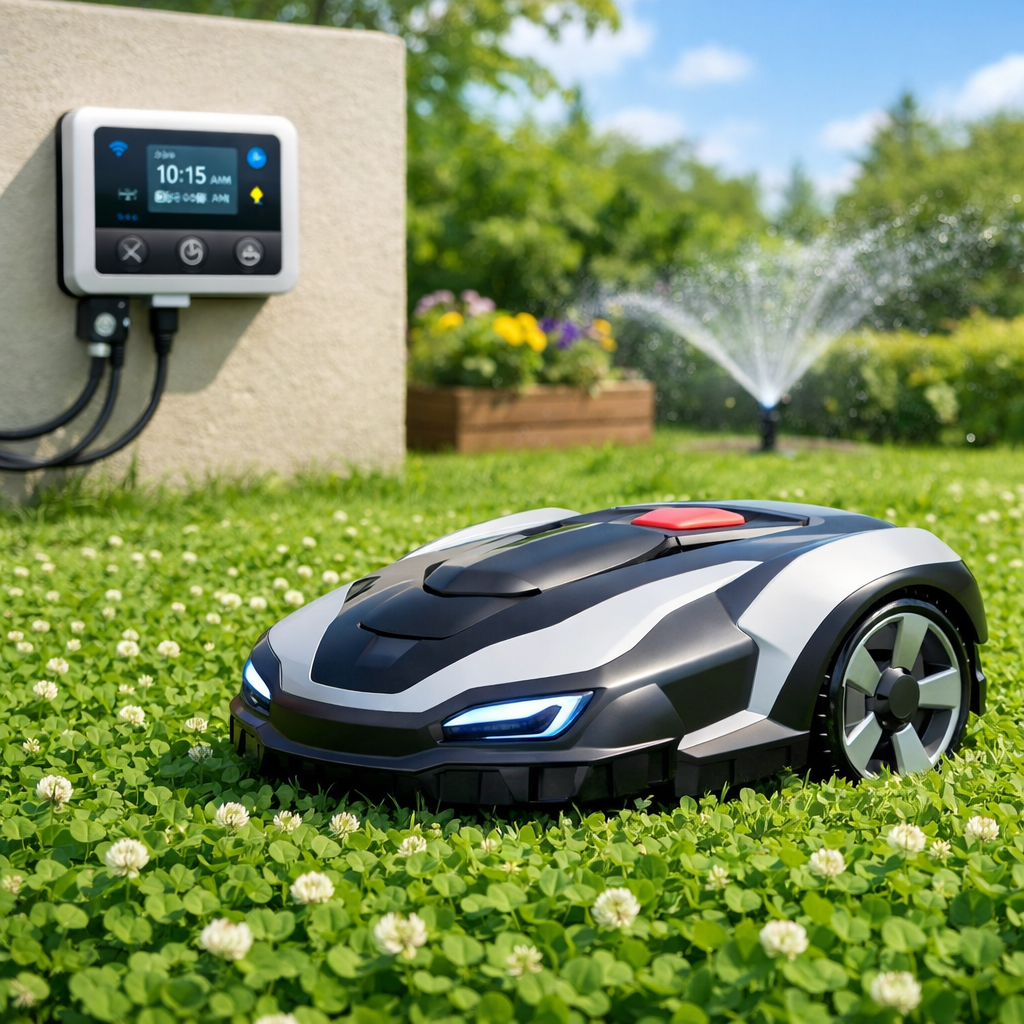
5. The Rise of the Robots
If you can have a Roomba for your floor, you can have one for your lawn.
- Robot Mowers: Models like the Husqvarna Automower or Worx Landroid graze your grass daily. This “micro-mulching” feeds the lawn constantly, meaning you fertilize less.
- Smart Controllers: Replace your “dumb” timer with a Rachio or RainBird smart controller. It connects to local weather stations and automatically cancels watering if rain is forecast. It pays for itself in water savings in one season.
6. Dense Planting is “Living Mulch”
The old advice was to space plants far apart. The result? A sea of mulch that grows weeds.
The Fix: Plant densely.
Design your beds so that plants touch when mature. This creates a “green canopy” over the soil, shading out weed seeds and locking in moisture. It looks lush, expensive, and intentional—but it’s actually just a defense mechanism against weeding.
7. Gravel Gardens (Xeriscaping Done Right)
“Xeriscaping” doesn’t have to mean a barren moonscape. The modern Gravel Garden combines deep layers of pea gravel or crushed granite with drought-tolerant perennials.
Why it wins:
- No mulch to replace: Stone lasts forever.
- Essential Drainage: Perfect for plants that hate “wet feet” (like Lavender).
- Modern Aesthetic: The clean look of stone contrasts beautifully with the softness of ornamental grasses.
The Payoff: ROI of “Lazy” Landscaping
Still on the fence? Let’s look at the numbers.
| Cost Category | Traditional Lawn (1,000 sq ft) | Low Maintenance Landscape | Annual Savings |
|---|---|---|---|
| Watering | $300 - $800 (Sprinklers) | $50 - $150 (Drip/Native) | ~$450 |
| Mowing | 30 hours (or $1,200 service) | 0 hours | 30 hrs / $1,200 |
| Fertilizer/Chems | $100 - $300 | $0 - $50 | ~$200 |
| Total Cost | ~$1,500 / year | ~$150 / year | $1,350 + 30 Hours |
FAQ: Low Maintenance Landscaping
Q: What is the most low maintenance landscape?
A: A “Hardscape-heavy” design with native evergreens is the absolute lowest maintenance. Combining a large patio or gravel garden with slow-growing shrubs like Dwarf Yaupon Holly or Boxwood requires almost zero weekly effort.
Q: Can I have a nice yard without a lawn?
A: Absolutely. In fact, lawn-free yards often look higher end. Replacing turf with deep garden beds, gravel patios, and groundcovers like Creeping Thyme creates a textural, sophisticated look that increases curb appeal while decreasing labor.
Q: What is the best ground cover to prevent weeds?
A: For sun, Creeping Thyme or Sedum forms a dense mat weeds can’t penetrate. For shade, Pachysandra or Wild Ginger are champions at smothering weeds.
Visualize Your Lazy Sunday
You can read about “Cyber-Lime” Coneflowers and permeable pavers all day, but until you see them in your yard, it’s hard to commit.
Don’t guess. See it.
- Snap a photo of your high-maintenance burden.
- Upload to YardRevision.
- Prompt: “Modern drought-tolerant front yard, slate gravel garden, native ornamental grasses, no lawn.”
Design your 2026 Oasis with YardRevision
Your weekends are for relaxing, not weeding.