
10 Backyard Design AI Ideas for Small Spaces
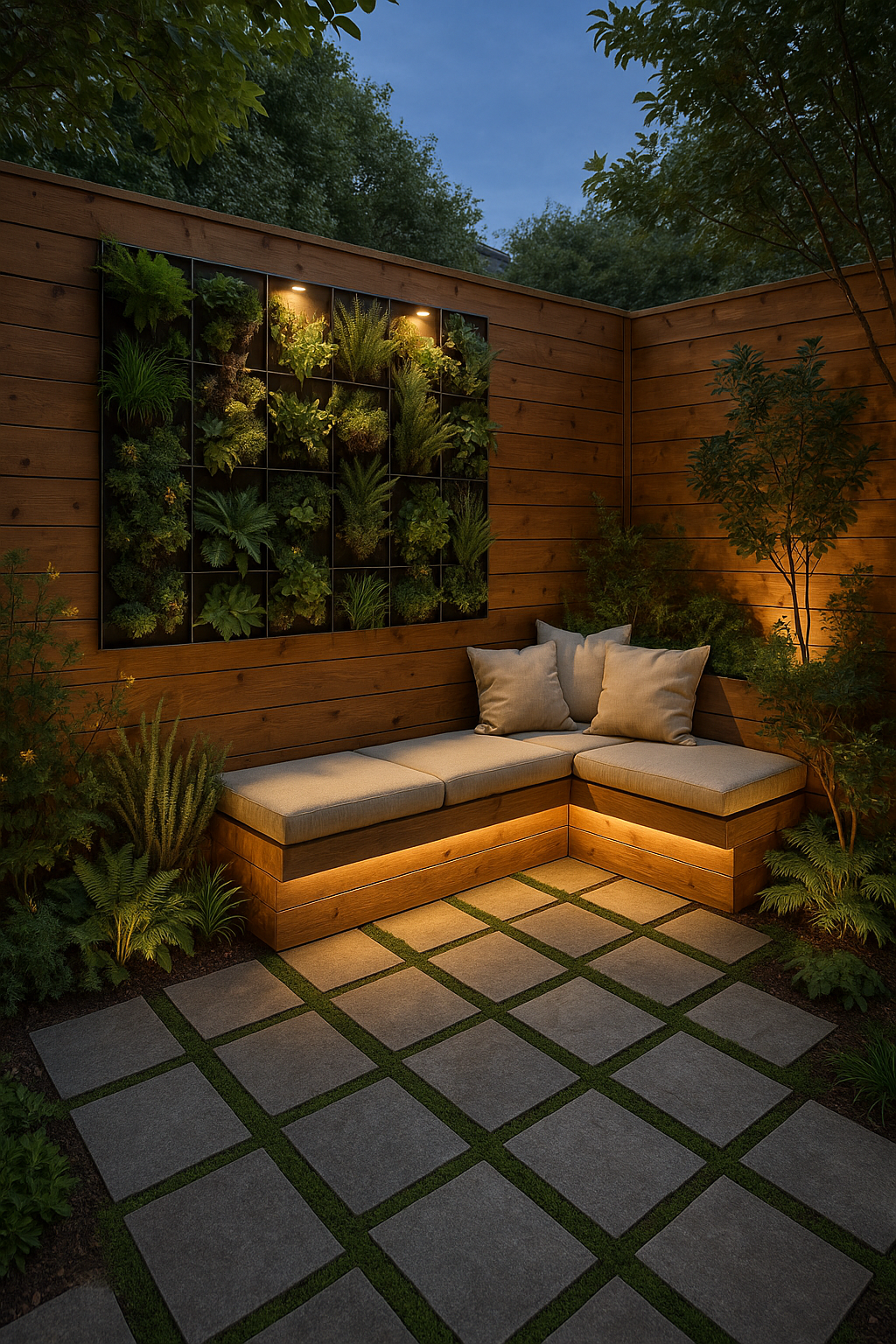
10 Backyard Design AI Ideas for Small Spaces
Having a small backyard doesn’t mean you have to think small. In fact, compact outdoor spaces often become the most cherished “rooms” of a home because they force creativity, intimacy, and thoughtful design.
The challenge with small spaces isn’t a lack of options—it’s knowing which options will actually fit without making your yard feel cluttered or chaotic. Will a fire pit make it feel cozy or cramped? Can you squeeze in a dining table and a lounge area?
This is where AI yard design tools become your secret weapon. Instead of guessing, you can visualize exactly how these space-saving ideas will look in your specific yard before you buy a single planter.
Here are 10 high-impact landscape design ideas for small backyards, complete with difficulty ratings, cost estimates, and AI prompts to help you test them in your own space today.
1. Go Vertical with Living Walls
When you can’t build out, build up. Vertical gardens draw the eye upward, making the footprint of your yard feel larger while adding lush greenery without sacrificing precious floor space.
- DIY Difficulty: Medium
- Cost Estimate: $$ ($200 - $800)
Why it works: It blurs the boundaries of your yard, hiding fences and walls behind foliage, which creates an illusion of depth.
💡 Pro Tip: Use wool pockets or felt systems for better drainage and root health compared to rigid plastic containers.
Visualize it with AI: Upload a photo of your yard and use a prompt like: “Small backyard with lush vertical garden walls, climbing jasmine on trellis, and modern wood fencing.” See how different plant textures change the feel of the space instantly.
2. Create Distinct “Micro-Zones”
Paradoxically, dividing a small space can make it feel bigger. By creating dedicated zones—a reading nook here, a dining spot there—you create a journey through the space rather than revealing everything at a single glance.
- DIY Difficulty: Low
- Cost Estimate: $ ($100 - $500 for furniture/rugs)
Why it works: It adds complexity and function, making the yard feel like a multi-room extension of your home.
💡 Pro Tip: Use outdoor rugs to visually define the “floor” of each zone without needing to pour new concrete.
Visualize it with AI: Try prompting: “Small backyard divided into two zones: a gravel dining area with bistro table and a separate raised wood deck for lounging, separated by low planters.”
3. The “Indoor-Outdoor” Seamless Flow
Blur the line between your living room and your backyard. Use similar flooring materials (or colors) inside and out, and large sliding or folding doors to borrow visual space from the interior.
- DIY Difficulty: High (requires renovation)
- Cost Estimate: $$$$ ($5,000+)
Why it works: It tricks the brain into perceiving the backyard and the indoor living area as one continuous, expansive space.
💡 Pro Tip: If replacing doors isn’t in the budget, simply matching the color of your outdoor pavers to your indoor flooring can achieve 80% of the visual effect.
Visualize it with AI: Prompt for: “Modern small backyard with concrete pavers matching indoor flooring, large sliding glass doors open, seamless transition, outdoor rug.”
4. Built-In Bench Seating
Bulky furniture is the enemy of small spaces. Built-in bench seating, especially tucked into corners or along retaining walls, maximizes seating capacity while keeping the center of the yard open for flow.
- DIY Difficulty: High (carpentry/masonry skills needed)
- Cost Estimate: $$$ ($1,500 - $4,000)
Why it works: It eliminates the “dead space” behind chairs and provides clean, architectural lines that reduce visual clutter.
💡 Pro Tip: Build storage into the benches to hide cushions, toys, and gardening tools, keeping your small yard clutter-free.
Visualize it with AI: Ask the AI to show: “Small urban courtyard with built-in wooden bench seating along the perimeter, floating wood bench, modern fire pit in center.”
5. Diagonal Paving and Layouts
Laying pavers or decking on a diagonal draws the eye to the longest distinct line in the yard, rather than straight across the shortest width.
- DIY Difficulty: Medium
- Cost Estimate: $$$ ($2,000 - $5,000)
Why it works: It creates an optical illusion of width and dynamism, breaking up the boxy feel of a standard rectangular lot. This is a classic trick in modern landscape design.
💡 Pro Tip: Use large-format pavers (24"x24" or larger). Fewer grout lines make the space feel less busy and more expansive.
Visualize it with AI: Experiment with: “Small backyard with large format concrete pavers laid on a 45-degree diagonal angle, gravel joints, modern minimalist style.”
6. Mirrors and Reflective Surfaces
The oldest trick in the interior design book works outdoors too. Strategically placed weather-resistant mirrors can double the perceived depth of a garden and bounce light into dark corners.
- DIY Difficulty: Low
- Cost Estimate: $ ($50 - $200)
Why it works: It literally reflects the view, suggesting that the garden continues beyond its physical boundaries.
💡 Pro Tip: Don’t place mirrors where birds might fly into them. Placing a trellis or some climbing vines in front of the mirror breaks up the reflection enough to warn birds while still adding depth.
Visualize it with AI: This is tricky to imagine but easy to see with AI. Prompt: “Small garden with large antique mirror on ivy-covered wall, reflecting greenery, creating illusion of depth.”
7. Multi-Functional Furniture
In a small yard, everything must earn its keep. Look for ottomans with storage inside, dining tables that fold down, or benches that convert into loungers.
- DIY Difficulty: Low (shopping only)
- Cost Estimate: $$ ($300 - $1,000)
Why it works: It reduces clutter and allows the space to adapt to different needs—from morning coffee for one to a dinner party for four—without needing to extra furniture.
💡 Pro Tip: Look for “nesting” tables that can be stacked away when not in use.
Visualize it with AI: While AI might not animate the furniture, you can visualize the different states. Try generating two versions: “Small patio set up for dining” and “Small patio set up for lounging with fire pit.”
8. Light Colors and Monochromatic Palettes
Light colors reflect light and make spaces feel airier. A monochromatic palette (e.g., all greens and whites, or shades of grey) reduces visual noise.
- DIY Difficulty: Low
- Cost Estimate: $ ($100 - $300 for plants/paint)
Why it works: High-contrast patterns and too many colors can make a small space feel busy and shrinking. Uniform colors create a calm, expansive feeling.
💡 Pro Tip: Paint your fences a dark charcoal or black. Paradoxically, dark fences often “disappear” behind green foliage better than white fences, making the yard feel boundless.
Visualize it with AI: Compare a “Small backyard with riot of colorful flowers and busy patterns” vs. “Small backyard with all white flowers, light grey pavers, and whitewashed fences, serene atmosphere.”
9. The “Destination” Focal Point
Place a striking feature—a fountain, a sculpture, or a beautiful specimen tree—at the furthest point of the yard.
- DIY Difficulty: Medium
- Cost Estimate: $$ ($300 - $1,500)
Why it works: It draws the eye all the way to the back, emphasizing the full length of the space and distracting from the side boundaries.
💡 Pro Tip: Use lighting to highlight this focal point at night, ensuring your yard feels deep even in the dark.
Visualize it with AI: Prompt: “Small backyard path leading to a modern water feature at the back wall, illuminated at night, focal point.”
10. Container Gardening and Tiered Planters
If you don’t have ground soil, use pots. But don’t just scatter them; use tiered stands or vary the heights of large pots to create a lush, layered look without a large footprint.
- DIY Difficulty: Low
- Cost Estimate: $ ($100 - $400)
Why it works: It adds volume and greenery vertically and allows you to rearrange your “garden” whenever you need to open up space.
💡 Pro Tip: Stick to 1-2 pot styles or colors to keep the look cohesive and uncluttered.
Visualize it with AI: Prompt: “Small patio with clustered large terracotta pots of varying heights, citrus trees and herbs, lush container garden.”
3 Common Small Yard Mistakes to Avoid
Before you start designing, watch out for these common pitfalls that can make a small space feel even smaller:
- Using Small Furniture: It sounds counterintuitive, but lots of tiny furniture makes a space feel cluttered. One substantial sofa often looks better than four small chairs.
- Over-Planting: While greenery is good, too many different types of plants create visual chaos. Stick to a palette of 3-5 plant varieties and repeat them.
- Ignoring Lighting: Dark corners shrink a room. Use string lights or uplighting to illuminate the perimeter fences, pushing the visual boundaries out at night.
How to Use AI to Plan Your Small Yard
Reading about these ideas is one thing; seeing them in your actual space is another. Here is how to use YardRevision to test these concepts:
- Take a Photo: Stand at your back door or in a corner to capture the widest view of your yard.
- Upload to YardRevision: The AI needs to understand your specific dimensions and constraints.
- Describe Your Idea: Use the prompts suggested above. Combine them! For example: “Small backyard with diagonal pavers, built-in corner seating, and vertical gardens on the fences.”
- Iterate: Don’t like the wood bench? Change the prompt to “concrete bench” or “stone wall seating.”
- Save Your Favorites: Create a shortlist of the designs that make your space feel the biggest and most inviting.
Designing a small space is about making smart choices. With AI, you can make those choices with confidence, knowing exactly how they will transform your cozy corner into a spacious-feeling retreat.
Ready to maximize your small backyard? Start visualizing for free with YardRevision today.