
20 Questions to Ask Before Designing Your Landscape (Free Worksheet)
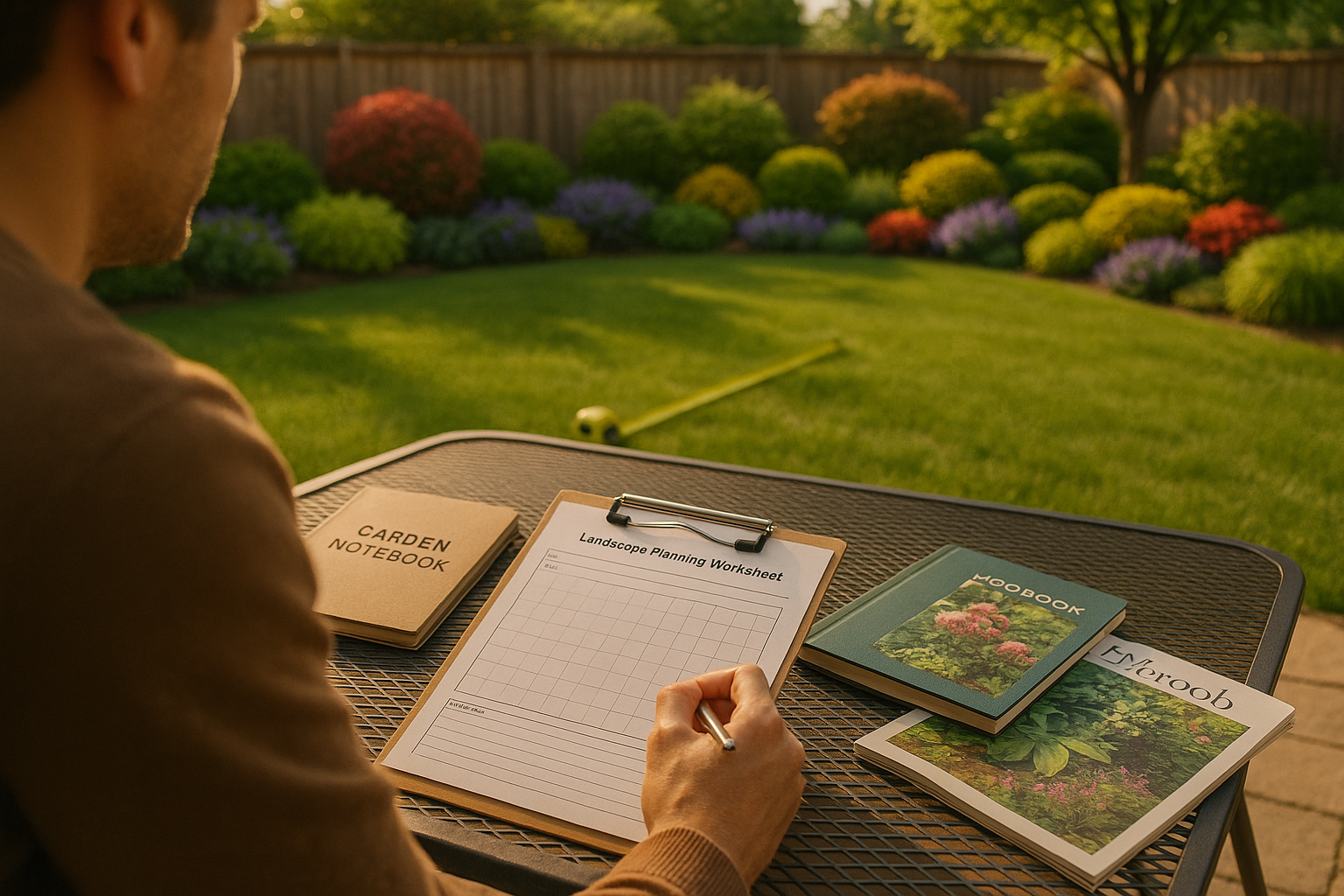
20 Questions to Ask Before Designing Your Landscape (Free Worksheet)
The Problem: You know you want to change your landscape, but you’re not sure exactly what you want. Sound familiar?
Most homeowners jump straight into Pinterest, collecting beautiful yard pictures without asking themselves the crucial questions that turn vague inspiration into a cohesive, practical plan.
The result? Frustration, indecision, and expensive mistakes.
This worksheet solves that.
Spend 20-30 minutes working through these 20 essential questions, and you’ll gain crystal-clear clarity about:
- What style actually fits your home and personality
- Which features matter most (and which you can skip)
- Your realistic budget and timeline
- How much maintenance you can actually handle
- What will make your outdoor space truly functional
Best part? Answer these questions before you start designing, and you’ll save thousands in mistakes, redesigns, and regrets.
Ready? Grab a pen (or open a notes app) and let’s get started.
📋 Quick Reference: What You’ll Get
By completing this landscape planning worksheet, you’ll have:
✅ Your design style defined in clear, actionable terms (not just vague Pinterest vibes)
✅ Ranked priorities so you know what to splurge on and what to skip
✅ Realistic budget & timeline that actually matches your life and finances
✅ Maintenance expectations aligned with time you can actually commit
✅ Site challenges identified before they become expensive surprises
✅ One-sentence design brief that guides every decision going forward
Time investment: 20-30 minutes | Value: $500-$2,000 (what designers charge for this) | Mistakes prevented: Potentially $10,000+
💾 Pro tip: This works great as a printable worksheet. Print it out, fill it in, and keep it handy when talking to contractors or shopping for plants.
How to Use This Worksheet
📝 What You’ll Need:
- 20-30 minutes of focused time
- Pen and paper (or digital notes)
- Honest answers (no judgment—this is for YOU)
- Your partner/family if the space will be shared
✅ The Process:
- Read each question carefully
- Write down your gut reaction first
- Then think deeper and refine
- Highlight your top 3-5 priorities
- Save your answers—you’ll reference them constantly
💡 Pro Tip: There are no “wrong” answers. If you want a high-maintenance rose garden and you’re willing to put in the work, that’s perfect. If you want zero-maintenance fake grass and a hammock, that’s equally perfect. This is about discovering what YOU want.
Section 1: Your Vision & Lifestyle (Questions 1-5)
These questions help you understand how you’ll actually use your outdoor space.
Question 1: How do you imagine using your outdoor space?
Why this matters: Different uses require different designs. An outdoor kitchen needs different infrastructure than a meditation garden.
Answer prompts:
- [ ] Entertaining guests (how many? how often?)
- [ ] Quiet relaxation and reading
- [ ] Kids’ play area
- [ ] Gardening (vegetables, flowers, both?)
- [ ] Outdoor dining with family
- [ ] Pet space (what kind of pet?)
- [ ] Exercise or sports
- [ ] Just looking pretty from inside
- [ ] Growing food
- [ ] Outdoor workspace
- [ ] Other: **___**
Your answer:
Write 2-3 sentences describing your ideal Saturday afternoon in your designed yard.
Question 2: Who will use this space regularly?
Why this matters: Design changes dramatically based on users. Toddlers need soft surfaces and visibility. Elderly users need accessible paths and seating.
Answer prompts:
- Adults only
- Young children (ages: ___)
- Teenagers
- Elderly family members
- Pets (types: ___)
- Frequent guests
- Occasional large gatherings
Your answer:
List everyone who will use the space and any special needs (accessibility, supervision requirements, pet-proofing, etc.)
Question 3: When will you use your outdoor space most?
Why this matters: If you only use it in evenings, you need lighting. If it’s mainly summer, skip the fire pit. If it’s year-round, plan for four-season interest.
Answer prompts:
- Early mornings (coffee on the patio?)
- Afternoons (lunch breaks, kids after school?)
- Evenings (dinner, entertaining?)
- Weekends only
- All year round
- Spring/summer only
- Specific seasons: **___**
Your answer:
Describe your typical use pattern and best-case scenario frequency.
Question 4: What problems does your current yard have?
Why this matters: Your design should solve existing frustrations, not create new ones.
Common problems (check all that apply):
- [ ] No privacy from neighbors
- [ ] Dead grass / bare spots
- [ ] Poor drainage / standing water
- [ ] Too much sun (no shade)
- [ ] Too much shade (nothing grows)
- [ ] No defined spaces
- [ ] Ugly view of utilities/neighbors
- [ ] Weeds everywhere
- [ ] No place to sit comfortably
- [ ] Nowhere to entertain
- [ ] High maintenance but no time
- [ ] Looks boring/dated
- [ ] Not functional for our needs
- [ ] Other: **___**
Your answer:
List your top 3 frustrations with your current yard.
Question 5: What do you love about your current yard (if anything)?
Why this matters: Don’t demolish the good stuff. Identify what’s working so you can keep or enhance it.
Answer prompts:
- Mature trees providing shade
- Privacy from certain angles
- Existing patio/deck
- Garden beds in good condition
- Good bones/layout
- Specific plants you love
- Views from certain spots
- Level ground / good grading
Your answer:
List anything worth keeping or building around.
Section 2: Style & Aesthetics (Questions 6-10)
These questions help you define your design style without needing to know design vocabulary.
Question 6: Describe your dream yard in 3-5 adjectives
Why this matters: This quickly reveals your aesthetic priorities.
Examples to inspire you:
- Lush, tropical, colorful, vibrant, exotic
- Clean, modern, minimal, architectural, geometric
- Cozy, cottage, romantic, abundant, whimsical
- Natural, native, eco-friendly, wild, meadow-like
- Formal, symmetrical, elegant, classic, traditional
- Desert, drought-tolerant, sculptural, textured, earthy
Your answer:
Write 3-5 words that capture the feeling you want.
Question 7: Which landscape style appeals to you most?
Why this matters: Helps narrow down plant palettes, materials, and overall vibe.
Style options (pick 1-2):
Modern/Contemporary
Clean lines, minimal plants, geometric shapes, concrete/metal/composite materials, monochromatic colors
Traditional/English Garden
Lush plantings, curved borders, mixed perennials, classic materials (brick, stone), romantic feel
Mediterranean/Tuscan
Warm tones, drought-tolerant, terracotta/tile, olive trees, lavender, courtyard feel
Tropical/Resort
Bold foliage, bright colors, lush layers, palms, bamboo, water features, vacation vibe
Native/Naturalistic
Regional plants, meadow-like, informal, sustainable, wildlife-friendly, low-water
Asian-Inspired/Zen
Simplicity, evergreens, natural stone, water features, contemplative, asymmetrical balance
Desert/Xeriscape
Succulents, cacti, gravel/rock mulch, bold textures, sculptural, drought-proof
Cottage/Farmhouse
Informal, abundant flowers, vegetable garden, picket fence, mixed plantings, cozy
Not sure? Pick descriptors:
- Formal vs. Informal
- Colorful vs. Monochromatic
- Lush vs. Minimal
- Structured vs. Natural
Your answer:
_Primary style: **___**
Secondary elements from: **____**
Question 8: What’s your color preference for plantings?
Why this matters: Color choices dramatically affect mood and should coordinate with your home’s exterior.
Options:
- Lots of color (rainbow garden)
- Limited palette (2-3 colors)
- Monochromatic (shades of one color)
- All greens (foliage only)
- Whites and silvers (elegant, calming)
- Warm tones (reds, oranges, yellows)
- Cool tones (blues, purples, pinks)
- Seasonal changes important
- Don’t care about color
Your answer:
Describe your ideal color scheme and any colors to avoid.
Question 9: Look at your home’s architecture. What style is it?
Why this matters: Your landscape should complement, not fight, your home’s style.
Home styles:
- Modern/Contemporary
- Traditional/Colonial
- Craftsman/Bungalow
- Ranch/Mid-Century
- Mediterranean/Spanish
- Farmhouse/Country
- Tudor/English
- Cape Cod/Coastal
- Other: **___**
Your answer:
_Home style: **___**
Exterior colors: **___**
Do you want landscape to match closely or contrast?: **____**
Question 10: What hardscape materials appeal to you?
Why this matters: Materials set the tone and affect budget significantly.
Patio/Path options you like:
- [ ] Natural stone (flagstone, bluestone)
- [ ] Pavers (brick, concrete)
- [ ] Poured concrete (plain or decorative)
- [ ] Decomposed granite
- [ ] Gravel
- [ ] Wood decking
- [ ] Composite decking
- [ ] Tile
- [ ] Not sure yet
Fence/Border options you like:
- [ ] Wood (natural, stained, painted)
- [ ] Metal (modern, ornamental iron)
- [ ] Vinyl/composite
- [ ] Stone/brick wall
- [ ] Living hedge
- [ ] No fence needed
Your answer:
_Materials that appeal to me: **___**
Materials I dislike: **____**
Section 3: Practical Constraints (Questions 11-15)
These questions establish your real-world parameters.
Question 11: What’s your realistic budget for this project?
Why this matters: Sets expectations and determines DIY vs. professional installation.
Budget ranges (total project):
- [ ] Under $2,000 (DIY refresh)
- What you get: New mulch, some plants, fresh edging, paint on existing structures
- [ ] $2,000-$5,000 (Small DIY project)
- What you get: Small patio, raised beds, basic plantings, simple lighting
- [ ] $5,000-$10,000 (Medium project, some professional help)
- What you get: Medium patio, significant plantings, irrigation, privacy fence
- [ ] $10,000-$25,000 (Significant transformation)
- What you get: Complete backyard redesign, hardscape, mature plants, features
- [ ] $25,000-$50,000 (Major renovation)
- What you get: Full property landscape, outdoor kitchen, water features, lighting
- [ ] $50,000+ (Complete high-end redesign)
- What you get: Resort-style design, pool, custom everything, professional install
- [ ] Not sure yet (need estimates)
Your answer:
_Total budget: $**___**
Can this be phased over time?: **___**
DIY vs. professional split: _%DIY / _%Professional_
Question 12: What’s your timeline?
Why this matters: Affects plant choices (instant vs. mature), phasing decisions, and whether you need design help.
Timeline options:
- Immediate transformation (this season)
- 1-year plan (plan now, implement over year)
- 2-3 year phased approach
- 5+ year master plan (do gradually)
- No rush, just planning
Your answer:
_Ideal completion: **___**
Realistic completion: **___**
Can it be phased?: **____**
Question 13: How much time can you commit to maintenance?
Why this matters: This is THE question people get wrong. Be brutally honest.
Maintenance time you can realistically commit:
- [ ] 30 minutes per week (very low maintenance)
- [ ] 1-2 hours per week (low maintenance)
- [ ] 3-5 hours per week (moderate maintenance)
- [ ] 5-10 hours per week (high maintenance)
- [ ] 10+ hours per week (gardening hobby)
- [ ] Will hire professional maintenance
Your answer:
_Realistic weekly time: **___**
Am I willing to hire help?: **___**
Seasonal tasks I’ll outsource (if any): **____**
Reality check:
- Lawn care (1,000 sq ft): ~1 hour/week
- Garden beds (100 sq ft): ~30-45 min/week
- Annual planting/pruning: Add 10-20 hours/year
Question 14: What’s your sun/shade situation?
Why this matters: Determines plant possibilities and comfort zones.
Sun exposure (observe throughout a full day):
- Full sun areas (6+ hours): Where? **___**
- Partial sun (3-6 hours): Where? **___**
- Full shade (<3 hours): Where? **___**
- Morning sun vs. afternoon sun?: **___**
Do you need MORE shade or SUN?
- [ ] Need more shade (for plants and comfort)
- [ ] Need more sun (too shady, nothing grows)
- [ ] Sun/shade balance is good
Your answer:
_Sun/shade assessment: **___**
Where do I want to spend time (sun or shade)?: **____**
Question 15: What are your soil and climate realities?
Why this matters: Work with your conditions, not against them.
Soil type (dig a test hole):
- [ ] Sandy (drains fast, needs frequent water)
- [ ] Clay (holds water, can be heavy)
- [ ] Loamy (ideal, crumbly)
- [ ] Rocky
- [ ] Don’t know
Drainage:
- [ ] Good (no standing water)
- [ ] Poor (puddles form after rain)
- [ ] Very poor (swampy areas)
Climate zone:
- USDA Zone: **___** (look up at usda.gov)
- Average rainfall: **___**
- Extreme temps: **___**
Water availability:
- [ ] In-ground irrigation exists
- [ ] Will install irrigation
- [ ] Hose watering only
- [ ] Rainwater only (drought-tolerant required)
Your answer:
_Soil/climate realities: **___**
Will I amend soil or choose appropriate plants?: **____**
Section 4: Features & Priorities (Questions 16-18)
These questions help you rank what matters most.
Question 16: Which features are must-haves vs. nice-to-haves?
Why this matters: When budget gets tight, you’ll know what to cut.
Rank each feature:
M = Must have | N = Nice to have | S = Skip it | ? = Unsure
- ___ Patio/sitting area
- ___ Outdoor dining space
- ___ Outdoor kitchen/grill area
- ___ Fire pit or fireplace
- ___ Water feature (fountain, pond)
- ___ Swimming pool or hot tub
- ___ Privacy screening
- ___ Shade structure (pergola, gazebo)
- ___ Lawn area (grass or alternative)
- ___ Garden beds/plantings
- ___ Vegetable garden
- ___ Fruit trees
- ___ Lighting (path, ambient, accent)
- ___ Irrigation system
- ___ Storage (shed, outdoor closet)
- ___ Play equipment (kids)
- ___ Pet area/features
- ___ Pathways/walkways
- ___ Edging/borders
- ___ Outdoor sound system
- ___ Outdoor heaters
- _ Other: ****_****
Your answer:
Top 5 must-haves:
Question 17: What’s more important to you?
Why this matters: Forces prioritization when choices conflict.
Pick one from each pair:
- [ ] Large patio OR [ ] Large garden beds
- [ ] Instant impact OR [ ] Long-term investment
- [ ] Low maintenance OR [ ] Lush appearance
- [ ] Native plants OR [ ] Favorite non-natives
- [ ] Privacy OR [ ] Open feel
- [ ] Outdoor dining OR [ ] Lawn for activities
- [ ] Lots of color OR [ ] Simple elegance
- [ ] Shade for comfort OR [ ] Sun for plants
- [ ] Entertaining space OR [ ] Personal retreat
- [ ] Formal look OR [ ] Natural feel
Your answer:
_When forced to choose, I prioritize: **____**
Question 18: What are your dealbreakers?
Why this matters: Knowing what you definitely DON’T want is as important as what you do want.
Things you absolutely don’t want:
- [ ] High maintenance
- [ ] Lawn to mow
- [ ] Thorny or messy plants
- [ ] Plants that attract bees (allergies)
- [ ] Poisonous plants (kids/pets)
- [ ] Anything that looks “dated”
- [ ] Bright colors
- [ ] Formal or fussy appearance
- [ ] Heavy water use
- [ ] Expensive materials
- [ ] Complicated features (water features, lighting)
- [ ] Other: **___**
Your answer:
_Absolute dealbreakers: **____**
Section 5: Final Considerations (Questions 19-20)
Question 19: Are there any site challenges you need to address?
Why this matters: These issues must be solved for any design to succeed.
Check any that apply:
- [ ] Steep slope or uneven terrain
- [ ] Poor drainage / flooding
- [ ] Eroding hillside
- [ ] Tree roots interfering
- [ ] Neighbor visibility issues
- [ ] No privacy
- [ ] Ugly views to screen
- [ ] High wind exposure
- [ ] Extreme heat or cold exposure
- [ ] Wildlife issues (deer, rabbits, etc.)
- [ ] HOA restrictions
- [ ] Utility boxes/easements visible
- [ ] Dog waste areas needed
- [ ] Other: **___**
Your answer:
_Challenges that must be addressed: **___**
Priority order for solutions: **____**
Question 20: What does success look like?
Why this matters: Clear goals make decisions easier and help measure progress.
One year from now, if your landscape is perfect, you will:
Fill in the blanks:
“I’ll spend _ hours/week enjoying my outdoor space doing ****_****.”
“When friends visit, they’ll say **___**.”
“The part I’m most proud of will be **___**.”
“I’ll have solved the problem of **___**.”
“My favorite time to be outside will be **___** because **___**.”
Your answer:
Write your vision of success—be specific and emotional.
What to Do Next: Turn Answers into Action
Congratulations! You’ve just done the hard work most people skip. Now you have clarity.
Step 1: Review Your Answers
Look for patterns:
- What themes keep appearing?
- What are your top 3 priorities?
- What’s your style in one sentence?
- What’s your realistic budget and timeline?
Write your one-sentence design brief:
“I want a **___** (style) **___** (primary function) that’s **___** (key feature) and requires **___** (maintenance level), completed within **___** (timeline) for **___** (budget).”
Example: “I want a modern, low-maintenance entertaining space that’s private and relaxing, completed in phases over 2 years for $15,000.”
Step 2: Visualize Your Vision
Now that you know what you want, see it come to life:
Option 1: DIY with AI (Fastest)
- Upload photos of your yard to YardRevision
- Use your answers to describe your vision
- Generate photorealistic designs in 30 seconds
- Iterate until it matches your worksheet
Option 2: Traditional Planning
- Sketch rough layouts on graph paper
- Research specific plants for your style/zone
- Visit nurseries with your list
- Create a phased implementation plan
Option 3: Hire a Professional
- Share this completed worksheet with designers
- Get much better proposals (they know what you want!)
- Save time and money with clear direction
- Avoid revision cycles
Step 3: Create Your Action Plan
Based on your answers, organize next steps:
Immediate (This Month):
- [ ] Solve any drainage/safety issues
- [ ] Remove dead plants or obvious problems
- [ ] Take photos from all angles
- [ ] Get 3 contractor bids (if hiring)
Short-term (Next 3 Months):
- [ ] Install hardscape (most permanent)
- [ ] Address privacy concerns
- [ ] Plant trees (they take longest to mature)
- [ ] Set up irrigation if needed
Medium-term (3-12 Months):
- [ ] Install garden beds and shrubs
- [ ] Add lawn or grass alternative
- [ ] Build/install features (fire pit, etc.)
- [ ] Add finishing touches
Long-term (1-3 Years):
- [ ] Let plants mature
- [ ] Add perennials and accents
- [ ] Install luxury features
- [ ] Refine and adjust
Common Question Patterns & What They Mean
Based on your answers, here’s what you probably need:
If you answered:
-
“Low maintenance” + “Budget-conscious” + “Full sun”
→ You need: Native/drought-tolerant plants, minimal lawn, gravel paths, simple design -
“Entertaining” + “Modern style” + “Good budget”
→ You need: Large patio, outdoor kitchen, clean plantings, good lighting, privacy screening -
“Family with kids” + “Functional” + “Moderate budget”
→ You need: Durable surfaces, visible play area, easy-care plants, phase in nice features later -
“Garden lover” + “Colorful” + “Time available”
→ You need: Multiple garden beds, irrigation, diverse plantings, tool storage, composting area -
“Privacy” + “Small space” + “Low sun”
→ You need: Vertical solutions, shade-tolerant plants, fencing or tall screening, containers
Bonus: Red Flags to Watch For
Your answers might reveal potential issues:
⚠️ Mismatched expectations:
- “Lush tropical paradise” + “Low maintenance” + “No irrigation”
→ Reality check needed
⚠️ Budget vs. scope:
- “Complete renovation” + “$3,000 budget”
→ Need phased approach
⚠️ Time vs. maintenance:
- “Elaborate gardens” + “30 min/week maintenance”
→ Simplify or hire help
⚠️ Climate vs. style:
- “English cottage garden” + “Desert climate”
→ Adapt style to reality
⚠️ Use vs. features:
- “Kids’ play area” + “Delicate plantings”
→ Rethink priorities
Save This Worksheet!
Don’t lose your answers. They’re valuable for:
- Staying focused during design decisions
- Communicating with contractors
- Avoiding scope creep
- Measuring success later
- Future phases or changes
Pro tip: Take a photo of this completed worksheet and save it to your phone. You’ll reference it when plant shopping, meeting contractors, and making on-the-fly decisions.
Ready to See Your Answers Come to Life?
You’ve defined what you want. Now see it.
Turn your worksheet into a visual design in minutes:
- Upload photos of your current yard
- Use your answers to describe your vision to AI
- See photorealistic previews instantly
- Share with family to get everyone aligned
- Use designs to get contractor bids or plan DIY
The Bottom Line
These 20 landscape planning questions do more than plan a landscape—they prevent mistakes that cost thousands and create outdoor spaces you’ll actually use and love.
Designers charge $500-$2,000 to ask you these exact questions during their consultation process. You just did it yourself for free.
Now go create that dream yard.
Frequently Asked Questions
Do I need to answer all 20 questions?
No, but the more you answer, the clearer your vision becomes. At minimum, complete Sections 1 (Vision & Lifestyle) and 3 (Practical Constraints). These establish your “must-haves” vs. “nice-to-haves” for landscape planning.
What if my answers conflict (like “low maintenance” + “lush garden”)?
Great observation! That’s exactly why this landscape design worksheet is valuable—it reveals unrealistic expectations before you spend money. When you spot conflicts, you have three options: adjust your vision, increase your budget/time commitment, or find creative solutions (like native plants that look lush but need little care).
Can I share this with a landscape designer?
Absolutely! Professional designers love when clients complete worksheets like this. It saves hours of back-and-forth and ensures you get proposals that actually match your vision. Your completed worksheet is worth its weight in gold during contractor consultations.
How do I know if my budget is realistic for my goals?
Compare your Question 11 budget to your Question 16 must-haves. As a rough guide: basic patio + plants = $5,000-$10,000; complete backyard transformation = $15,000-$30,000; resort-style outdoor living = $40,000+. If there’s a gap, either phase your project over multiple years or adjust priorities.
What if I don’t know my USDA hardiness zone or soil type?
No problem! Look up your zip code at usda.gov for your zone. For soil type, dig a small hole after rain—if water drains in minutes, it’s sandy; if it pools for hours, it’s clay. Or, use a free virtual landscape designer that can recommend appropriate plants based on your location.
Should I fill this out alone or with my partner/family?
Start alone to capture your honest preferences, then compare answers with your partner. Differences are normal! Use this landscape planning guide to have productive conversations about priorities and compromise before you’re standing in a nursery arguing about plant choices.
How often should I revisit my answers?
Review your worksheet every 3-6 months as you implement your plan. Your answers might evolve as you actually use the space—that’s normal. Save each version so you can track how your vision develops and learn what works for future landscape planning projects.
Can I use this worksheet for front yard and backyard separately?
Yes! In fact, we recommend it. Front yards typically prioritize curb appeal and low maintenance, while backyards focus on function and enjoyment. Fill out separate worksheets and you’ll notice how your answers differ based on the space’s purpose.
Related Resources
Want more help with your landscape planning? Check out these guides:
- How to Design Your Backyard: Complete Guide with AI - Turn your worksheet answers into actual designs
- AI Garden Planner: Design Your Perfect Garden - Plan specific garden beds and plant combinations
- Virtual Landscape Designer: Transform Your Yard Online - See photorealistic previews of your landscape plan
Share Your Progress
Working through this worksheet? We’d love to hear what you discovered about your landscape vision!
Email us at support@yardrevision.com or share on social with #YardRevision
About the Author
The YardRevision Team has helped thousands of homeowners clarify their landscape vision and transform their outdoor spaces. This worksheet synthesizes the most important questions professional designers ask clients—condensed into a free, DIY-friendly format that gives you the same clarity without the $2,000 consultation fee.