
5 Ways to Landscape a Sloped Backyard: The 3-Zone Strategy
5 Ways to Landscape a Sloped Backyard: The 3-Zone Strategy
A sloped backyard is often seen as a curse. It drains poorly, it’s hard to mow, and you can’t put a table on it without your drink sliding off.
But to a landscape designer, a slope is an opportunity.
Flat yards are boring. Slopes offer built-in views, natural drama, and separation of spaces. The secret to unlocking this potential is not to flatten the whole thing (which costs a fortune), but to use the 3-Zone Strategy.
The 3-Zone Strategy
Before you look at specific ideas, divide your slope mentally into three zones:
- The Top (The Outlook): The highest point. Best for seating and views.
- The Slope (The Journey): The steep part. Best for planting and paths.
- The Bottom (The Destination): The lowest point. Best for drainage control and secluded “secret garden” spots.
Here are 5 ways to apply this strategy to your yard.
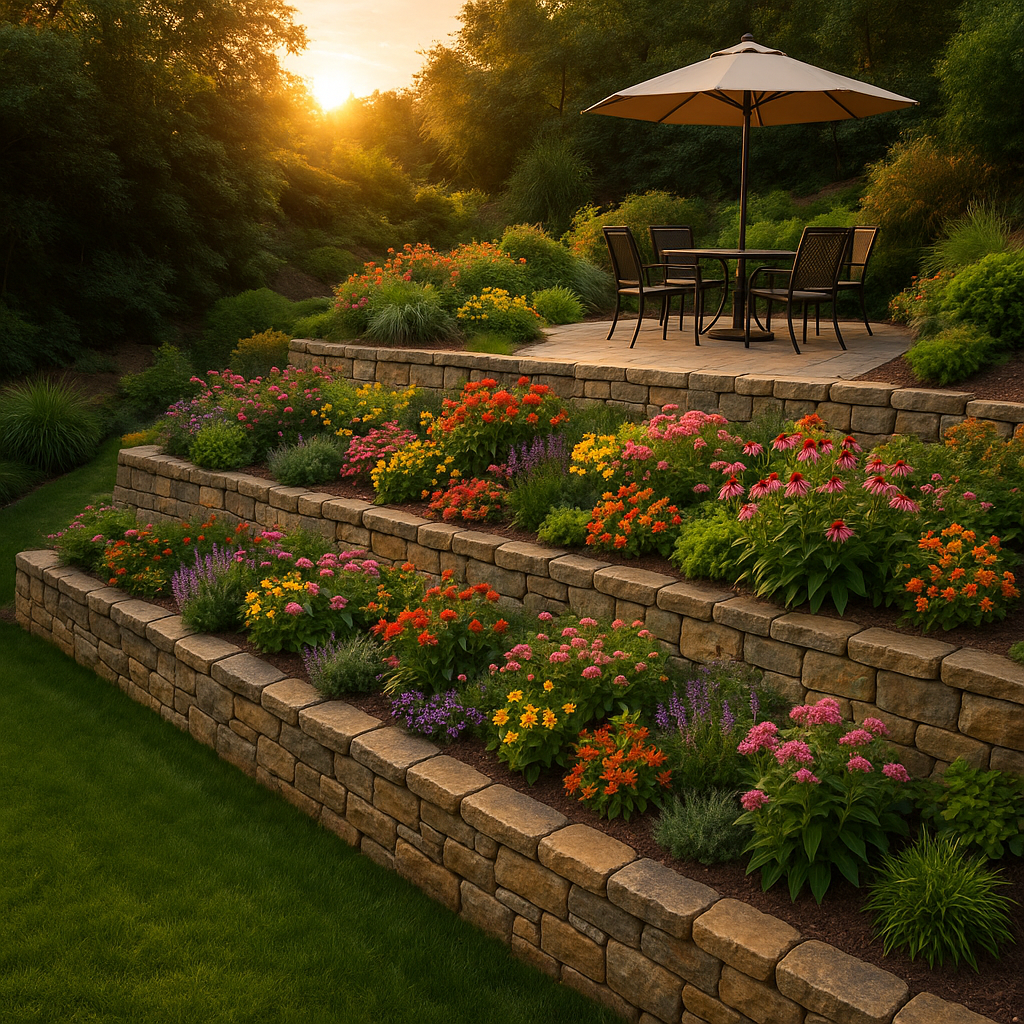
1. The Classic Terrace (Retaining Walls)
Best For: Steep slopes > 30 degrees.
Cost: $$$$
This is the most functional solution. By cutting into the hill and building retaining walls, you turn one unusable slope into multiple flat “steps.”
- Zone 1: Patio off the back door.
- Zone 2: Terraced garden beds or a flat lawn area.
- Zone 3: A lower play area or vegetable garden.
Pro Tip: Don’t build one massive 10-foot wall. It looks like a fortress and requires expensive engineering. Build two 4-foot walls instead. It’s friendlier and often cheaper.
2. The “Switchback” Path (Naturalistic)
Best For: Gentle to medium slopes.
Cost: $$
If you don’t need flat lawn space, don’t build walls. Embrace the nature trail vibe. Create a winding path that zig-zags down the hill.
- Zone 2: Winding stone or gravel path with deep-rooted native plants (to hold the soil).
- Zone 3: A fire pit destination at the bottom.
Top Plants for Slope Stabilization:
- Creeping Juniper: Tough, evergreen, and covers ground fast.
- Daylilies: Deep roots and beautiful flowers.
- Ornamental Grasses (Fountain Grass): Fibrous roots that knit soil together.
Drainage Note: Water runs fast downhill. A winding path helps slow it down, preventing erosion.
3. The Rock Garden (Low Maintenance)
Best For: Rocky soil or very steep areas where you can’t mow.
Cost: $
Mowing a steep hill is dangerous. Stop doing it. Turn the slope into a rock garden using boulders and drought-tolerant alpine plants.
- The Strategy: Embed large boulders (1/3 buried) into the hillside to act as mini-retaining walls. Plant creeping ground cover like Thyme or Sedum between them.
- Bonus: This solves erosion problems instantly without pouring concrete.
4. The Deck Overlook
Best For: Slopes that drop off immediately from the house.
Cost: $$$
Sometimes the ground is too unstable or steep to build on. So build over it. A cantilevered deck extends your living space out into the air, giving you the feeling of being in a treehouse.
- Zone 1: The Deck (eating/entertaining).
- Zone 2: The “Under-Deck” (storage or dry shade garden).
- Zone 3: The view you are looking at.
5. The Amphitheater (Creative)
Best For: Convex or bowl-shaped slopes.
Cost: $$
If your yard slopes down toward a central point, create a sunken fire pit or seating area. Use the slope itself as the “backrest” for built-in stone or concrete bench seating.
- Why it works: It turns the “problem” of the slope into the “feature” of the seating.
Retaining Wall Materials: Pros & Cons
If you go the terrace route, choose your material wisely.
| Material | Cost | Longevity | Best For |
|---|---|---|---|
| Pressure-Treated Timber | $ | 10-15 Years | DIYers, shorter walls (<3ft) |
| Interlocking Concrete Blocks | $$ | 50+ Years | Medium walls, specific looks |
| Natural Stone (Dry Stack) | $$$ | Lifetime | Natural aesthetic, drainage |
| Poured Concrete | $$$$ | Lifetime | Modern look, tall structural walls |
Safety Warning: In most areas, any wall over 4 feet tall requires a permit and a structural engineer. Don’t risk a collapse. When in doubt, hire a pro.
Money Pitfalls: Slope Edition
Slopes are expensive if you ignore physics.
- Drainage is King: If you build a wall without drainage pipes (weep holes) behind it, water pressure will knock it over. Period.
- Erosion Control: Never leave a bare slope during rainy season. If you clear vegetation, cover it with jute netting immediately.
Frequently Asked Questions
Q: What is the cheapest way to landscape a slope?
A: The “Switchback Path” or a Rock Garden are the cheapest options because they don’t require expensive retaining walls. Use gravel, boulders, and native plants.
Q: How do I stop my hillside from washing away?
A: You need plants with deep, fibrous roots. Turf grass has shallow roots and is bad for slopes. Plant shrubs, ornamental grasses, or ground covers like Pachysandra.
Q: Can I build a retaining wall myself?
A: Yes, if it is under 3 feet tall. Timber or interlocking blocks are the most DIY-friendly. Anything taller requires engineering to prevent collapse.
Visualize Before You Dig
Slopes are incredibly hard to visualize from a 2D drawing. You need to see the verticality.
- Take a photo looking up (or down) your slope.
- Upload to YardRevision.
- Prompt: “Terraced backyard with stone retaining walls and steps.” or “Hillside rock garden with boulders.”
See which strategy fits your vibe—and your budget—before you move a single shovel of dirt.