
Spring Landscaping by Zone: When to Start, What to Plant, and How to Plan Your Growing Season
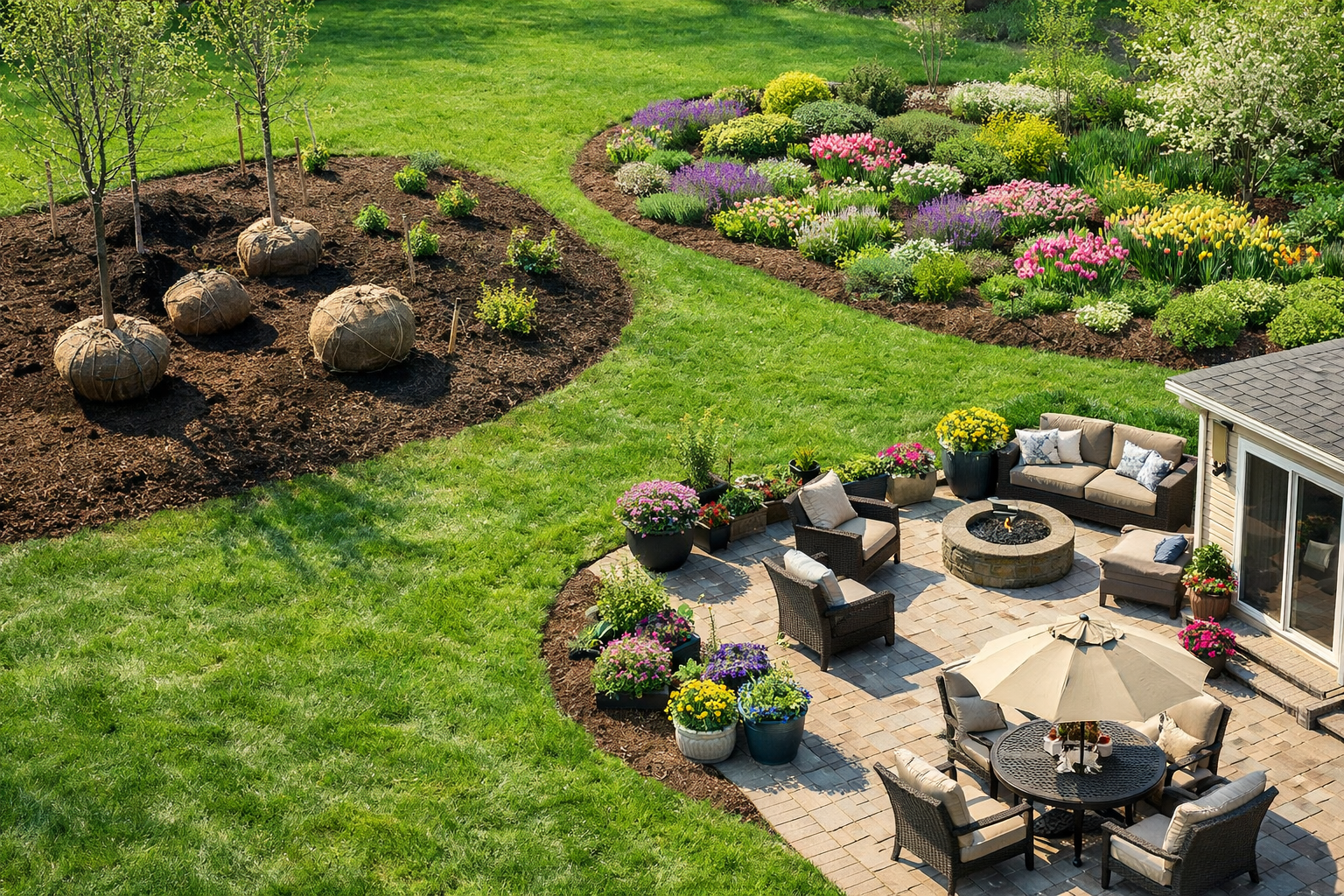
Spring Landscaping by Zone: When to Start, What to Plant, and How to Plan Your Growing Season
Every spring, millions of homeowners make the same mistake: they walk into a garden center on the first warm Saturday, buy whatever looks good, and start planting. By July, half of it is dead. The National Gardening Association estimates that U.S. households spend over $500 per year on lawn and garden—and a huge chunk of that is replacing plants that didn’t survive because they were planted at the wrong time.
The problem isn’t effort—it’s timing. A petunia planted two weeks before a late frost is a dead petunia. A tree planted in July heat needs three times the water it would’ve needed in April. And a yard with no plan is just expensive chaos.
This guide gives you something most spring landscaping articles don’t: a specific timeline based on where you actually live. Your USDA hardiness zone determines when your growing season starts, what survives your winters, and which plants will thrive versus struggle. Once you know your zone, everything else falls into place.
What’s a Hardiness Zone (and Why Should You Care)?
The USDA Plant Hardiness Zone Map divides North America into 13 zones based on average annual minimum winter temperatures. Each zone spans 10°F. Your zone tells you:
- When your last spring frost typically hits (this is your green light)
- Which plants survive your winters (perennials, trees, shrubs)
- How long your growing season lasts (your total working window)
Find your zone in 10 seconds: Go to planthardiness.ars.usda.gov and enter your zip code. Write it down—you’ll reference it for every plant purchase from now on.
Here’s a quick reference:
| Zone | Avg Min Temp | Example Cities | Last Frost (Approx) |
|---|---|---|---|
| 3–4 | -40°F to -20°F | Minneapolis, Anchorage, Bismarck | Mid-May to Early June |
| 5–6 | -20°F to 0°F | Chicago, Denver, Boston, St. Louis | Mid-April to Mid-May |
| 7–8 | 0°F to 20°F | Atlanta, Dallas, Seattle, Charlotte | Late March to Mid-April |
| 9–10 | 20°F to 40°F | Phoenix, Houston, Los Angeles, Miami | Late Feb or No Frost |
Why this matters for planning: If you’re in Zone 5 and you plant tender shrubs in March, you’re gambling against six more weeks of potential frost. But if you wait until June, you’ve lost the best establishment window. Timing isn’t a suggestion—it’s the difference between a yard that thrives and one that barely survives.
A note on microclimates: Your zone is a starting point, not gospel. A south-facing bed against a brick wall can be a full zone warmer than your north-facing front yard. Urban areas hold heat longer than rural ones. Hilltops get frost later than valleys (cold air sinks). And if you’re near a large body of water, your spring comes later but your fall lasts longer. Pay attention to your specific property—walk it in the morning after a cold night and notice where frost lingers versus where it melts first. Those patterns tell you more than any map.
The Spring Task Sequence: Do Things in This Order
Regardless of your zone, the order of operations is the same. The timing shifts, but the sequence doesn’t. Follow this and you avoid the classic mistake of planting flowers before your soil is ready or laying sod before your drainage is fixed.
Phase 1: Assess and Clean (2–4 Weeks Before Last Frost)
- Soil test. A $15 soil test from your local extension office tells you exactly what amendments you need. Skip this step and you’re guessing all season.
- Clean up winter debris. Remove dead leaves, broken branches, and anything smothering your lawn. Rake matted grass to let air in.
- Check hardscape. Inspect patios, retaining walls, fences, and walkways for frost heave damage. Fix structural issues before you plant around them.
- Edge beds. Clean, defined edges between lawn and garden beds make everything look intentional, even before a single flower blooms.
Phase 2: Hardscape and Structure (Around Last Frost)
- Install or repair hardscape. Patios, paths, retaining walls, raised beds. Always do this before planting—heavy equipment and foot traffic destroy new plants.
- Set up irrigation. Run drip lines, check sprinkler heads, repair winter damage. Watering infrastructure goes in before plants, not after.
- Amend soil. Based on your soil test, add compost, lime, sulfur, or fertilizer. Work it into the top 6–8 inches of your beds.
Phase 3: Plant Trees and Shrubs (1–3 Weeks After Last Frost)
- Trees first. They’re your biggest investment and take the longest to establish. Plant while they’re still dormant or just leafing out.
- Shrubs next. Foundation plantings, hedges, and screening shrubs. Spring planting gives them a full growing season to root in before winter.
- Water deeply at planting. New trees and shrubs need 1–2 inches per week for the first season. Deep, infrequent watering beats daily sprinkles.
Phase 4: Plant Perennials and Ground Covers (2–4 Weeks After Last Frost)
- Perennials. These are your long-term investment—they come back every year. Plant after frost risk is low but while spring rain is still reliable.
- Ground covers. Plant spreading ground covers early so they fill in by summer. They suppress weeds and reduce mulch needs.
- Divide existing perennials. Spring is the best time to split overgrown hostas, daylilies, ornamental grasses, and other clumps. Free plants.
Phase 5: Mulch, Annuals, and Finishing Touches (4–6 Weeks After Last Frost)
- Mulch beds. 2–3 inches of hardwood mulch. Not volcano-mulched against tree trunks—keep it 3 inches away from bark.
- Plant annuals. These are your seasonal color. Wait until frost danger is completely past. They’re cheap and expendable, so don’t rush them.
- Lawn care. Overseed bare spots, apply pre-emergent (timing varies by zone), and set your mower height. Taller grass = deeper roots = fewer weeds.
The planning payoff: Notice how planting is Phase 3–5, not Phase 1. Most homeowners skip straight to buying plants. The ones who plan first—who know their zone, test their soil, fix their hardscape, and visualize their layout—end up with yards that look professional on a DIY budget.
Plan your spring landscape layout before you buy a single plant →
Zone-by-Zone Spring Guide
Zones 3–4: The Short but Mighty Season
Where: Minnesota, Wisconsin, Montana, upstate New York, northern New England, the Dakotas
Your reality: You get a compressed growing season—roughly late May through September. Frost can sneak in as late as early June, and it comes back as early as mid-September. Every week counts.
Spring Timeline:
| When | What to Do |
|---|---|
| Late March–April | Plan and order. Soil is still frozen. This is your design window—use it. |
| Early May | Soil test, clean up, edge beds. Start hardscape work as ground thaws. |
| Mid-May | Plant bare-root trees and shrubs. They’re cheaper and establish faster than container stock. |
| Late May–Early June | After last frost: plant perennials, divide existing plants. |
| Mid-June | Annuals, mulch, finishing touches. Your season is fully underway. |
Best Spring Plant Picks for Zones 3–4:
- Trees: Paper birch (fast-growing, stunning white bark), bur oak (bulletproof native, lives centuries), crabapple (spring blooms + fall fruit for wildlife), Colorado blue spruce (year-round structure and windbreak)
- Shrubs: Dwarf bush honeysuckle (first to bloom, attracts pollinators early), ninebark (burgundy foliage, zero maintenance), arrowwood viburnum (fall color + berry clusters), potentilla (blooms all summer in poor soil)
- Perennials: Black-eyed Susan (blooms July–frost), Siberian iris (thrives in wet or dry), bee balm (hummingbird magnet), daylily (foolproof color), hosta (shade workhorse)
- Ground Cover: Creeping juniper (evergreen, handles extreme cold), wild ginger (native shade cover), sweet woodruff (fragrant, spreads fast in shade)
Spring Lawn Care for Zones 3–4: Wait until the ground is fully thawed and dry enough to walk on without leaving footprints. Rake out dead matting, overseed bare patches with a cold-hardy fescue or bluegrass blend in mid-May, and hold off on fertilizer until the grass has been actively growing for 2–3 weeks.
Zone 3–4 Pro Tip: Start seeds indoors 6–8 weeks before last frost. Harden off transplants gradually—your outdoor temps swing wildly in May. And choose cultivars bred for cold hardiness. A “Zone 5” label on a plant tag is a gamble here.
Zones 5–6: The Classic Spring Window
Where: Chicago, Denver, Boston, St. Louis, Portland (OR), Indianapolis, Kansas City, much of the mid-Atlantic
Your reality: You have the most “textbook” growing season. Last frost is mid-April to mid-May, giving you a solid 5–6 month window. Most mainstream gardening advice was written for your zones.
Spring Timeline:
| When | What to Do |
|---|---|
| Early March | Soil test, plan layout, order plants. Prune summer-blooming shrubs before they leaf out. |
| Late March–Early April | Clean up, edge beds, start hardscape projects. |
| Mid-April | Plant trees and shrubs after ground is workable. Apply pre-emergent to lawn (soil temp 55°F). |
| Early May | Perennials, ground covers, divide existing plants. |
| Mid–Late May | Annuals after last frost. Mulch beds. Start regular watering schedule. |
Best Spring Plant Picks for Zones 5–6:
- Trees: Red maple (fast shade, spectacular fall color), serviceberry (spring flowers + edible berries + fall color—triple threat), Eastern redbud (early spring blooms on bare branches, stops traffic), white oak (long-lived native, supports 500+ insect species)
- Shrubs: Hydrangea paniculata (blooms on new wood so spring frost can’t kill the flowers), lilac (fragrant spring classic), winterberry holly (fall/winter berry show, needs a male pollinator), boxwood (evergreen structure year-round)
- Perennials: Coneflower (drought-tough, blooms for months), salvia (deer-resistant, pollinator favorite), catmint (lavender-blue clouds, cut back for repeat bloom), peony (decades-long investment, incredible spring fragrance), Karl Foerster grass (vertical accent, stands through winter)
- Ground Cover: Pachysandra (shade-loving evergreen, never needs mowing), creeping phlox (spring carpet of color on slopes), ajuga (bronze foliage + blue spring flowers), sedum (drought-proof, great for sunny spots)
Spring Lawn Care for Zones 5–6: Apply pre-emergent crabgrass preventer when soil temperature hits 55°F (usually mid-April). Overseed bare spots, but not at the same time as pre-emergent—it prevents all seeds from germinating. If your lawn needs both, overseed first and skip pre-emergent this year, or treat different areas separately.
Zone 5–6 Pro Tip: Your biggest risk is jumping the gun. That one warm week in March doesn’t mean spring is here. Watch soil temperature, not air temperature. When your soil consistently reads 55°F at 4 inches deep, your growing season has truly started.
Zones 7–8: The Early Start Advantage
Where: Atlanta, Dallas, Seattle, Charlotte, Memphis, parts of coastal Mid-Atlantic, Pacific Northwest
Your reality: Your last frost is late March to mid-April, giving you a 7–8 month growing season. You can start earlier than most of the country, but summer heat becomes your second enemy. Spring is both your planting window AND your “beat the heat” countdown.
Spring Timeline:
| When | What to Do |
|---|---|
| Late February | Soil test, clean up, prune. You’re already in the window. |
| Early–Mid March | Plant trees, shrubs, and cool-season perennials. Hardscape work. |
| Late March–Early April | Perennials, ground covers, divide existing plants. Apply mulch. |
| Mid-April | Warm-season annuals after last frost. Transition to summer watering. |
| May | Your spring planting window is closing. Focus on establishment and watering. |
Best Spring Plant Picks for Zones 7–8:
- Trees: Crape myrtle (summer blooms for months, peeling bark in winter), live oak (massive shade, semi-evergreen), Japanese maple (sculptural form, shade-tolerant), magnolia (iconic spring flowers, evergreen in many varieties)
- Shrubs: Loropetalum (purple foliage year-round, pink spring flowers), knockout roses (bloom spring through frost with zero fuss), gardenia (intoxicating fragrance, evergreen), abelia (arching branches, blooms summer through fall, deer-resistant)
- Perennials: Lantana (heat-loving, drought-proof once established), salvia (endless cultivars for sun or shade), rudbeckia (tough native, self-seeds), black-eyed Susan (golden blooms all summer), gaura (delicate wands of flowers, handles heat beautifully)
- Ground Cover: Asiatic jasmine (evergreen, dense, chokes out weeds), liriope (handles sun or shade, nearly indestructible), mondo grass (fine texture for borders and between pavers), creeping thyme (fragrant, walkable, loves hot dry spots)
Spring Lawn Care for Zones 7–8: Warm-season grasses (Bermuda, zoysia, St. Augustine) green up in April. Scalp your lawn low in early March to remove dead thatch, then let it grow to optimal height. Apply pre-emergent in late February/early March—earlier than you think. First fertilizer goes down when the grass is actively growing, not when it first turns green.
Zone 7–8 Pro Tip: Plant trees and shrubs as early as possible. They need established root systems before summer heat arrives. A tree planted in March has three months to root in before 95°F days. A tree planted in May has three weeks. That head start is everything.
Zones 9–10: Already Growing (Plan for Heat, Not Frost)
Where: Phoenix, Houston, Los Angeles, Miami, San Diego, south Florida, desert Southwest
Your reality: Your challenge isn’t frost—it’s heat. Many Zone 9–10 gardeners treat fall and winter as their primary planting seasons, with spring as a secondary window before summer scorches everything. If you’re planting in spring, you’re racing the clock.
Spring Timeline:
| When | What to Do |
|---|---|
| February | Prime planting month. Trees, shrubs, perennials—get them in now. |
| March | Last comfortable planting window. Mulch heavily (3–4 inches). Set up irrigation. |
| April | Focus on establishment, not new planting. Deep watering schedule. |
| May–June | Survival mode for new plants. Shade cloth for transplants. Water early morning only. |
Best Spring Plant Picks for Zones 9–10:
- Trees: Palo verde (desert native, green bark photosynthesizes even without leaves), desert willow (orchid-like blooms, minimal water), live oak (massive long-lived shade tree), citrus (plant established trees now for fruit by winter)
- Shrubs: Texas sage (blooms after rain—literally called “barometer bush”), bougainvillea (explosive color, loves heat and neglect), oleander (tough screening plant, blooms all summer), desert spoon (sculptural, zero water once established)
- Perennials: Lantana (thrives in 110°F+), agave (architectural statement, decades-long lifespan), red yucca (hummingbird magnet, coral flower spikes all summer), penstemon (native wildflower look, reseeds), desert marigold (golden blooms almost year-round)
- Ground Cover: Trailing lantana (fast-spreading color for slopes), myoporum (dense evergreen mat), dymondia (silver-green, walkable, no mowing), buffalo grass (native lawn alternative, fraction of the water)
Spring Lawn Care for Zones 9–10: If you have Bermuda grass, it greens up in March—scalp it low and let it fill in. Consider replacing traditional turf with buffalo grass or a ground cover alternative. In desert climates, gravel with native ground covers uses 75% less water than a lawn and looks intentional rather than lazy.
Zone 9–10 Pro Tip: Mulch is your best friend. In hot climates, bare soil can reach 150°F in summer—that cooks roots. A thick mulch layer keeps soil 20–30°F cooler. And water deeply but infrequently. You’re training roots to go deep, where moisture lasts.
The 90-Day Window: Why Planning Before Planting Changes Everything
Here’s what most homeowners get wrong: they think spring landscaping starts at the garden center. It actually starts at the planning stage—weeks before you buy a single plant.
The typical approach:
- Get inspired by a warm day
- Drive to the garden center
- Buy whatever catches your eye
- Plant it wherever there’s space
- Wonder why it doesn’t look like the photo by August
The planned approach:
- Know your zone and frost dates
- Visualize your layout with the right plants in the right spots
- Follow the task sequence (soil → hardscape → trees → shrubs → perennials → annuals)
- Buy exactly what you need
- Watch it fill in beautifully because everything is in the right place
The difference between these two approaches isn’t talent or budget—it’s a plan. And the best time to make that plan is right now, before your 90-day spring window closes.
Tip: Use YardRevision to visualize your spring landscape layout before you visit the garden center. See how different trees, shrubs, and garden beds will look in your actual yard—so you buy with confidence instead of guesswork.
Quick Reference: All Zones at a Glance
| Zones 3–4 | Zones 5–6 | Zones 7–8 | Zones 9–10 | |
|---|---|---|---|---|
| Start Planning | March–April | Early March | Late February | January–February |
| Plant Trees/Shrubs | Mid-May | Mid-April | Early March | February |
| Plant Perennials | Late May–June | Early May | Late March–April | February–March |
| Plant Annuals | Mid-June | Mid–Late May | Mid-April | March |
| Growing Season | ~4 months | ~5–6 months | ~7–8 months | ~10–12 months |
| Biggest Risk | Late frost | Jumping the gun | Summer heat | Scorching new plants |
| Pre-Emergent Timing | Late May | Mid-April (55°F soil) | Late Feb–Early March | February |
What Does a Spring Landscaping Push Actually Cost?
You don’t have to do everything at once. Here’s what common spring projects typically run so you can prioritize:
| Project | DIY Cost | With a Pro |
|---|---|---|
| Soil test + amendments (per 500 sq ft) | $20–$50 | $50–$150 |
| 1 shade tree (planted) | $100–$300 | $300–$800 |
| 5 shrubs (foundation planting) | $75–$200 | $250–$600 |
| Perennial bed (100 sq ft) | $50–$150 | $200–$500 |
| Mulch (per 500 sq ft, 3" deep) | $50–$100 | $150–$300 |
| Spring lawn renovation (1,000 sq ft) | $30–$75 | $200–$400 |
A focused spring push—one tree, a few shrubs, a perennial bed, and fresh mulch—can transform a front yard for $300–$800 DIY. For more detail on costs and when to DIY vs hire, see our complete cost comparison guide.
Spring Landscaping Mistakes to Avoid
Planting too early. One warm week doesn’t mean winter is over. Trust your zone’s last frost date, not the weather this week.
Skipping the soil test. You wouldn’t paint a wall without primer. Don’t plant in soil you haven’t tested. Most extension offices do it for $10–$20.
Planting before hardscape. That patio installation will destroy the garden bed you just planted next to it. Structure first, plants second.
Buying the wrong zone plants. That gorgeous Zone 8 shrub is going to die in your Zone 5 winter. Always check the tag. If it doesn’t list your zone, put it back.
Planting too deep. The root flare (where the trunk widens at the base) should be at or slightly above soil level. Buried root flares kill more trees than drought.
Ignoring mature size. That cute 3-foot shrub is going to be 8 feet wide in five years. Plan for mature dimensions, not nursery size.
Planning prevents all of these. When you visualize your layout first, you catch spacing issues, wrong-zone plants, and hardscape conflicts before they become expensive mistakes.
Frequently Asked Questions
When is the best time to start spring landscaping?
It depends on your zone. Zones 9–10 can start in February. Zones 7–8 in early March. Zones 5–6 in late March/early April. Zones 3–4 should wait until May. The key date is your last frost—work backward from there.
Can I plant trees in spring?
Spring is one of the two best times to plant trees (fall is the other). Plant as early as possible after the ground is workable so trees have maximum time to establish roots before summer heat.
What’s the most impactful thing I can plant this spring?
A well-placed shade tree. It won’t look like much in year one, but in 5–10 years it transforms your entire property—reducing cooling costs, creating usable outdoor space, and adding significant home value.
Should I remove old mulch before adding new?
No. Old mulch breaks down and feeds the soil. Just top up to maintain 2–3 inches total depth. The exception: if you see fungal mats or the mulch smells sour, remove and replace it.
How do I know if my soil is ready to work in spring?
Grab a handful and squeeze. If it forms a muddy ball that doesn’t crumble, it’s too wet—wait a week. If it crumbles apart easily, you’re good to go. Working wet soil destroys its structure.
How much should I budget for spring landscaping?
It depends on scope. A focused refresh (one tree, five shrubs, a perennial bed, mulch) runs $300–$800 DIY. A full front yard transformation might be $2,000–$5,000 DIY or $5,000–$15,000 with a contractor. Start with the highest-impact items—usually a shade tree and clean bed edges—and expand from there. See our full cost guide for detailed breakdowns.
Is it too late to start if it’s already April/May?
Not at all—but your approach changes. In Zones 5–6, you’re right in the sweet spot through May. In Zones 7–8, shift focus to heat-tolerant picks and water establishment. Even in Zones 9–10, container plants and transplants with root balls (not bare-root) still work through March. The only thing that’s truly “too late” is planting bare-root trees after they’ve leafed out.
I’m overwhelmed. Where do I literally start?
Three things, in this order: (1) Look up your hardiness zone. (2) Get a soil test kit. (3) Visualize your yard with a layout plan so you know what goes where before you spend a dime. Everything else flows from those three steps.
Your Spring Action Plan
Spring doesn’t wait, and neither should your planning. Here’s your checklist:
- [ ] Look up your USDA hardiness zone
- [ ] Check your zone’s last frost date
- [ ] Order a soil test from your local extension office
- [ ] Walk your property and note what needs repair, removal, or replacement
- [ ] Visualize your layout before buying plants
- [ ] Follow the 5-phase task sequence for your zone
- [ ] Plant with confidence—because you have a plan
The homeowners who end up with magazine-worthy yards aren’t luckier or richer. They just started with a plan and planted at the right time.