
Landscape AI: Transform Your Yard with AI Visualization Before You Build
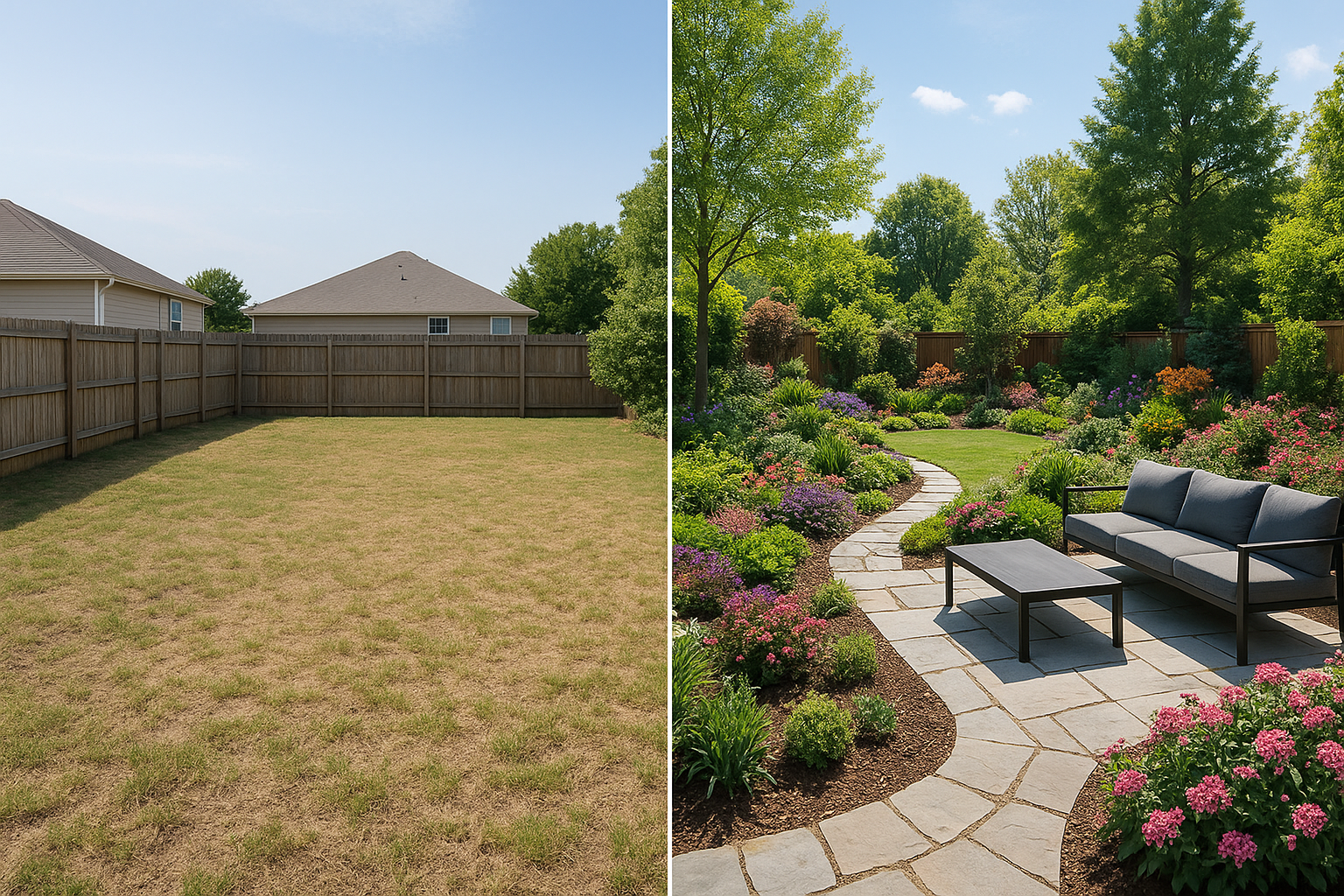
Landscape AI: Transform Your Yard with AI Visualization Before You Build
Planning a landscape transformation is exciting—but it’s also risky. Will those flower beds really complement your home’s exterior? Is that patio size right for your space? Will the overall design match your vision? Traditional landscaping often means making expensive decisions based on nothing more than imagination and hope.
Enter landscape AI: a revolutionary technology that lets you see exactly what your yard will look like before you invest a single dollar in plants, materials, or labor. With landscape AI tools, homeowners can now preview photorealistic transformations, explore unlimited design options, and make confident decisions about their outdoor spaces.
What Is Landscape AI and How Does It Work?
Landscape AI combines advanced artificial intelligence, machine learning, and image generation technology to create photorealistic previews of your landscaping plans. This powerful landscape design software works by analyzing photos of your actual property and generating stunning visualizations based on your specific requirements.
Here’s how landscape AI transforms the design process:
The Technology Behind Landscape AI
Modern landscape AI tools use sophisticated deep learning models trained on millions of outdoor images. These AI systems understand spatial relationships, lighting, perspective, and natural elements like plants and hardscaping materials. When you upload a photo and describe your vision, the landscape AI:
- Analyzes your property photo - Understanding the existing space, features, and architectural style
- Processes your design description - Interpreting your specific vision for plants, materials, and aesthetic style
- Generates photorealistic visualizations - Creating images that show what your completed project could look like
- Offers unlimited variations - Allowing you to explore different design approaches instantly by adjusting your descriptions
Key Capabilities of Landscape AI
Unlike basic design sketches or generic templates, landscape AI offers:
- Photorealistic image generation that shows realistic representations of how your finished yard could look
- Property-specific designs that transform your actual property photos, not generic templates
- Multiple design iterations so you can compare different style approaches side-by-side
- Detailed customization responding to specific requests for plants, hardscaping, features, and aesthetic styles
- Seasonal and lighting variations exploring how your landscape concept looks in different conditions
- Visual communication tools that help you clearly convey your vision to contractors and family
The Hidden Costs of Traditional Landscaping (And How Landscape AI Saves Money)
Expensive Trial and Error
Traditional landscaping often involves making decisions that can’t be undone without significant cost. Plant the wrong tree? You’ll discover it blocks your view in five years. Install the wrong patio size? You’re looking at expensive demolition and reinstallation. These mistakes can cost homeowners thousands in corrections.
Landscape AI eliminates costly guesswork by showing you exactly how different elements will look together before any physical work begins. Test multiple plant combinations, patio layouts, and hardscaping options risk-free.
Slash Designer Fees with AI Landscape Design
Hiring a professional landscape designer for even a basic consultation can cost $500-$2,000 or more. Full design packages often run $3,000-$10,000 depending on property size and complexity. While professional designers are invaluable for complex projects, many homeowners just want to explore a few options before committing.
Landscape AI makes design exploration incredibly affordable by generating unlimited variations of your vision at a fraction of traditional design costs. Use AI to refine your ideas, then bring in a professional for final touches if needed—saving thousands in design fees.
Bridge Communication Gaps with Visual Clarity
Describing your landscaping vision to contractors can feel like a game of telephone—what you imagine and what they build often don’t match. Vague descriptions like “I want a nice garden” or “something modern” leave too much room for interpretation. This leads to disappointment, disputes, expensive changes, and project delays.
Visual references created by landscape AI give you and your contractors a crystal-clear shared understanding of the end goal, reducing miscommunication dramatically and ensuring your vision becomes reality.
Avoid Costly Design Changes Mid-Project
One of the most expensive landscaping mistakes is changing your mind after work has begun. Once plants are in the ground or hardscaping is installed, modifications mean wasted materials and additional labor costs.
Landscape AI helps you commit confidently by letting you explore and refine your vision thoroughly before any work begins. When you can see and compare multiple design options, you’re less likely to experience buyer’s remorse mid-project.
How to Use Landscape AI Tools Effectively
Getting the most from landscape AI software requires a strategic approach. Follow these best practices to maximize your results and create stunning visualizations that accurately represent your dream outdoor space.
Start with Quality Photos
Landscape AI performs best when given clear, well-lit photos of your property. For optimal results:
- Photograph during golden hour - Mid-morning (9-11am) or late afternoon (3-5pm) provides the best natural lighting
- Capture multiple angles - Front yard views from the street, backyard panoramas, side yard perspectives
- Include context - Show your home’s exterior so the landscape AI can match architectural styles
- Focus on specific areas - Take close-ups of spaces you want to transform
- Avoid shadows - Choose times when harsh shadows won’t obscure important features
- Use high resolution - Higher quality photos produce better AI landscape design results
Be Specific About Your Vision
The more detailed your description, the better your landscape AI-generated results. Specific prompts help the AI understand exactly what you’re envisioning. Instead of vague descriptions, try:
Vague: “Add some plants”
Specific: “Add a curved flower bed along the fence with purple and white flowering perennials including lavender, salvia, and white roses”
Vague: “Put in a patio”
Specific: “Install a 12x16 foot flagstone patio with irregular bluestone pavers and built-in bench seating along the back edge”
Vague: “Make it modern”
Specific: “Create a contemporary outdoor living space with clean geometric lines, concrete pavers, minimalist metal furniture, and ornamental grasses”
Explore Multiple Landscape Styles with AI
Don’t commit to your first design. One of landscape AI’s biggest advantages is the ability to explore unlimited style options quickly and affordably. Try these popular approaches:
- Modern minimalist - Clean lines, geometric shapes, strategic plantings, neutral color palettes
- Traditional cottage gardens - Abundant flowering plants, curved borders, informal layouts, romantic feel
- Mediterranean styles - Terra cotta, lavender, rosemary, drought-resistant plants, gravel pathways
- Tropical paradises - Bold foliage, vibrant colors, palm trees, exotic flowering plants
- Zen-inspired spaces - Rocks, bamboo, water features, gravel, simple plantings, tranquil atmosphere
- Native landscapes - Regional plants, sustainable choices, wildlife-friendly, low maintenance
- Formal gardens - Symmetrical designs, manicured hedges, structured layouts, classic elegance
Leverage AI for Seasonal Previews
One powerful feature of landscape AI is the ability to see how your design will look throughout the year. This prevents the common mistake of designing for summer and forgetting winter aesthetics. Generate seasonal variations:
- Spring blooms - Flowering trees, bulbs emerging, fresh green growth
- Summer lushness - Full foliage, vibrant colors, peak garden season
- Fall foliage - Changing leaf colors, autumn interest plants, harvest tones
- Winter structure - Evergreen bones, architectural elements, bark interest
Understanding year-round appeal helps you select plants that provide visual interest even when not flowering.
Test Different Plant Combinations
Use landscape AI to experiment with various plant pairings before purchasing anything. Test:
- Color schemes - Complementary colors, monochromatic palettes, seasonal color waves
- Texture contrasts - Fine foliage against bold leaves, soft grasses with rigid evergreens
- Height variations - Layered plantings with ground covers, mid-height perennials, and tall specimens
- Maintenance levels - Compare high-maintenance annual displays versus low-maintenance perennial gardens
Real-World Benefits of Landscape AI: Beyond Pretty Pictures
Landscape AI delivers tangible value that goes far beyond creating attractive images. These practical benefits translate into real savings, better results, and increased property value.
Budget Your Landscaping Project with Confidence
When you can see what you’re creating with landscape AI visualizations, you can make more informed budgeting decisions and communicate clearly with contractors. Visualizing your ideas helps you identify potential budget concerns before spending money.
Benefits include:
- Better design communication - Show contractors exactly what you envision for more accurate quotes
- Explore cost alternatives - Compare expensive vs. budget-friendly design approaches visually
- Realistic budget planning - Identify complex elements that might increase costs before committing
- Visual value assessment - See which design investments provide the most aesthetic impact
Create a Phased Multi-Year Implementation Plan
Most homeowners can’t afford to complete an entire landscape transformation at once. Landscape AI helps you plan multi-year projects strategically. Visualize the complete end goal, then break it into affordable phases:
Example Phased Approach:
- Year 1: Hardscaping foundation - Patios, pathways, retaining walls, grading
- Year 2: Major plantings - Trees, large shrubs, evergreen structure
- Year 3: Perennial gardens and decorative elements - Flower beds, ornamental details, finishing touches
Each phase builds toward your complete vision without overwhelming your budget, and landscape AI ensures every phase works harmoniously toward the final design.
Secure HOA and Permit Approvals Faster
Need approval from your homeowners association or local planning board? Landscape AI-generated visualizations provide clear, professional-looking representations that help decision-makers understand your plans quickly.
Traditional hand-drawn sketches or verbal descriptions often lead to:
- Multiple revision requests because reviewers can’t visualize the final result
- Approval delays while you create additional documentation
- Denials based on misunderstanding your intentions
Photorealistic AI landscape visualizations instantly communicate your vision, leading to faster approvals and fewer revision cycles.
Maximize Curb Appeal and Property Value
Strategic landscaping can increase property value by 5-20% according to real estate studies. But only well-executed designs deliver these returns. Poor landscaping choices can actually detract from value.
Landscape AI helps you:
- Design for maximum curb appeal by previewing street views
- Balance costs with value by focusing on high-impact improvements
- Avoid dated trends by exploring timeless design options
- Create cohesive designs that complement your home’s architecture
Plan for Seasonal Interest and Year-Round Beauty
One of the most common landscaping mistakes is creating a yard that looks stunning in summer but dull the rest of the year. Landscape AI prevents this by generating seasonal previews.
Use AI to ensure:
- Four-season interest with plants that provide visual appeal year-round
- Succession blooming so something is always flowering throughout growing season
- Winter structure from evergreens, interesting bark, and architectural elements
- Fall color from trees and shrubs with autumn foliage
Make Sustainable, Climate-Appropriate Choices
With landscape AI, you can experiment with native plants, drought-tolerant species, and sustainable design approaches before committing. Preview how:
- Native plant gardens can reduce water usage while supporting local ecosystems
- Xeriscaping creates beautiful low-water landscapes perfect for dry climates
- Rain gardens manage stormwater while adding beauty
- Pollinator gardens attract butterflies and bees with strategic plant choices
Combining Landscape AI with Professional Expertise
Landscape AI isn’t meant to replace landscape professionals—it’s a powerful tool that makes working with them more effective and efficient. The best results often come from combining AI visualization capabilities with professional knowledge and experience.
How Professionals Use Landscape AI
Forward-thinking landscape designers and contractors increasingly incorporate AI tools into their workflows:
- Initial consultations - Show clients multiple AI-generated concepts in the first meeting
- Design refinement - Quickly iterate on ideas based on client feedback
- Client presentations - Present photorealistic previews instead of technical drawings
- Material selection - Help clients visualize different hardscaping materials and plant choices
- Project proposals - Include AI visualizations in quotes to justify pricing
How Homeowners Can Leverage AI When Working with Pros
If you’re hiring landscape professionals, use AI to enhance collaboration:
- Share AI-generated images with landscapers to clearly communicate your vision before they quote
- Get accurate quotes based on specific visual plans rather than vague verbal descriptions
- Collaborate on refinements by iterating on AI designs with professional input on feasibility
- Validate professional proposals by comparing contractor suggestions with your AI explorations
- Request modifications with visual references rather than trying to describe changes
- Understand technical limitations as professionals can identify issues in AI designs
When to DIY with Landscape AI vs. Hire a Professional
DIY-Friendly Projects Perfect for Landscape AI:
- Simple plant bed additions
- Flower garden design and layout
- Container garden arrangements
- Small patio or pathway projects
- Existing landscape refreshes
- Plant replacement decisions
Projects That Need Professional Input:
- Major grading or drainage work
- Retaining walls over 3 feet tall
- Irrigation system installation
- Large tree planting or removal
- Structural hardscaping (decks, pergolas)
- Projects requiring permits or engineering
Use landscape AI to develop your vision, then consult professionals for structural or technical elements that require expertise, proper tools, or permits.
Common Questions About Landscape AI
Is landscape AI accurate?
Modern landscape AI tools create photorealistic visualizations that show realistic interpretations of your vision when provided with quality photos and detailed descriptions. While AI-generated images are artistic representations rather than architectural blueprints or exact measurements, they provide valuable previews of design styles, color schemes, plant arrangements, and overall aesthetic feel. Think of them as “concept art” that helps you visualize and communicate your landscaping goals.
How much does landscape AI cost?
Landscape AI tools vary widely in pricing. Some offer free limited trials, while professional-grade services range from $10-50 per month for unlimited designs. This represents a tiny fraction of traditional landscape design fees ($500-10,000+) while providing similar visualization benefits.
Can landscape AI work with photos of my actual property?
Yes! The most effective landscape AI tools work directly with photos of your property, transforming your actual space rather than creating generic designs. This ensures designs respect your property’s unique dimensions, architecture, and existing features.
What if I don’t know anything about plants or landscaping?
That’s exactly what makes landscape AI so valuable. You can experiment with different aesthetic styles and design concepts without needing expert knowledge. The AI creates visual representations of landscaping ideas, while you focus on what looks appealing to you. You can then share your favorite visualizations with landscape professionals who can translate the aesthetic into specific plant species suitable for your climate, proper materials, and buildable plans. Think of landscape AI as your “mood board generator” that helps you communicate your style preferences.
Will contractors actually follow my AI-generated designs?
AI visualizations serve as excellent communication tools that help contractors understand your aesthetic vision and style preferences. While they aren’t technical blueprints with measurements or plant IDs, most contractors appreciate clear visual references when quoting and planning. Professional landscapers can use your AI images as inspiration and style guides to create detailed implementation plans with proper measurements, specific plant species for your region, and accurate material lists.
Getting Started with Landscape AI: Your Step-by-Step Guide
Ready to revolutionize your yard planning with landscape AI? Follow this comprehensive guide to get started:
Phase 1: Preparation (Day 1)
- Photograph your property - Take clear, well-lit photos from multiple angles during good weather
- Identify your goals - Define what you want: more curb appeal, better outdoor living, lower maintenance, increased privacy, etc.
- Set your budget - Determine realistic budget ranges for materials and labor
- Research inspiration - Browse landscaping magazines, Pinterest, Instagram for styles you love
- Note problem areas - Identify drainage issues, dead zones, or eyesores to address
- List style keywords - Jot down words that describe your ideal aesthetic (modern, cottage, tropical, minimalist, etc.)
Phase 2: Design Exploration (Days 2-7)
- Choose a landscape AI tool - Select software that fits your needs and budget
- Upload your photos - Start with your best-lit, clearest property photos
- Generate initial concepts - Create 5-10 diverse design options exploring different styles
- Compare and contrast - Review designs side-by-side to identify favorite elements
- Refine promising directions - Request variations on your favorite concepts with more specific details
- Test seasonal views - Generate summer, fall, winter, and spring versions
- Share with household - Get input from family members who’ll use the space
Phase 3: Refinement and Planning (Days 8-14)
- Select your top 2-3 designs - Narrow down to most promising visual concepts
- Create detailed variations - Generate multiple versions with more specific style descriptions
- Get feedback - Share visualizations with family members to build consensus
- Consider maintenance - Think about whether the aesthetic matches your available upkeep time
- Plan implementation phases - Identify which elements to prioritize if building in phases
- Prepare contractor questions - Use AI images to help you describe what you want to landscapers
- Finalize your design direction - Choose the visualization that best represents your ideal aesthetic
Phase 4: Implementation (Weeks 3+)
- Get professional quotes - Share visualizations with 2-3 contractors to communicate your aesthetic goals
- Discuss feasibility - Work with pros to translate AI concepts into buildable plans with proper plant species and materials
- Obtain necessary permits - Check local requirements for hardscaping, grading, or structure work
- Finalize detailed plans - Let professionals create technical specs based on your AI inspiration images
- Schedule the work - Plan installation timeline based on optimal planting seasons
- Use AI as a reference - Keep visualizations handy to communicate desired aesthetic during construction
- Document the transformation - Take before-and-after photos to track your landscape evolution
Popular Landscape AI Design Trends for 2025
Stay current with these emerging landscape design trends that work beautifully with AI visualization:
Outdoor Living Rooms
Creating seamless indoor-outdoor transitions with comfortable seating, weather-resistant furniture, outdoor kitchens, and covered spaces. Landscape AI excels at showing how these functional spaces blend with plantings.
Sustainable Native Gardens
Low-maintenance landscapes using regional native plants that support local ecosystems, require less water, and thrive without fertilizers. AI helps visualize the natural, layered look of native plantings.
Edible Landscaping
Incorporating fruit trees, berry bushes, herbs, and vegetables into ornamental designs. Landscape AI can show how productive plants create beautiful, functional yards.
Climate-Resilient Designs
Drought-tolerant xeriscaping, rain gardens, and designs that handle extreme weather. AI visualization helps preview how these practical solutions can also be aesthetically stunning.
Minimalist Modern
Clean lines, geometric shapes, limited plant palettes, and emphasis on hardscaping and structure. Landscape AI renders these contemporary aesthetics with photorealistic precision.
The Future of Landscape Design Is Here
The days of landscaping by guesswork are over. Landscape AI technology empowers homeowners to make informed, confident decisions about their outdoor spaces. Whether you’re planning a complete yard overhaul or a simple flower bed addition, seeing your vision come to life digitally first means better results, fewer mistakes, and more satisfaction with your final landscape.
This revolutionary technology democratizes landscape design, making professional-quality visualizations accessible to everyone. No longer do you need a $5,000 design fee to see what your yard could become. With landscape AI, that power is at your fingertips.
Key Takeaways: Why Landscape AI Matters
- Saves money by preventing costly design mistakes and reducing designer fees
- Improves results by allowing unlimited experimentation before committing
- Enhances communication between homeowners and contractors
- Reduces risk by providing clear previews of finished projects
- Accelerates approvals from HOAs and planning boards
- Increases confidence in major landscaping investments
- Enables better planning with seasonal previews and phased approaches
Ready to Transform Your Yard with Landscape AI?
Stop imagining what your landscape could look like and start seeing it. Landscape AI takes the guesswork out of landscape design, helping you create the outdoor space you’ve always wanted with confidence and clarity.
Your dream yard is closer than you think—and now you can see it before you build it. With landscape AI visualization, you’re not gambling on expensive landscaping decisions. You’re making informed choices backed by photorealistic previews that show exactly what you’re creating.
What would you like to see in your yard? The possibilities are endless, and with landscape AI, they’re all just a few clicks away. Start exploring today and discover the yard you’ve always imagined.